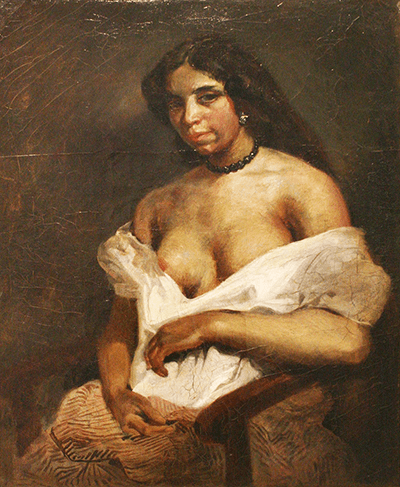
While researching for this article, I did a generic search for “fetishization of mixed race women” and found only two results. I tried sexualisation instead, which only brought three new but irrelevant sources. I played around with wording for searches, but even the larger ones produces scores of irrelevant sources to the topic.
It opened my eyes to the fact that more research needs to be done to allow a person to search carelessly if, for example, they wanted a quick academic answer to something. Like me, they would have to rethink how to search before finding what should have been a readily available answer, but this would take prior knowledge of terminology to search for. However, this further motivated me to write this more urgently, to add to non-academic sources on this topic.
While some reference will be made to mixed race women generally, the overall focus is on mixed race women of African descent and living in the African continent specifically. This article was initially inspired by the fetishization of Cape Verdean women during the 2026 World Cup. A few academic articles are referenced in the article, however, it remains a non-academic article.
Sexualisation of “The Savage”
When the colonists arrived in various parts of the world they did not take the time to understand the people they encountered. Their ignorance towards the foreign and arrogant refusal to step outside themselves led to the production of stereotypes of non-white populations as “savage” and “uncivilised” compared to the European population. This was a very hypocritical assumptions as many colonists were evangelists who had left countries with large numbers of non-devout people. Modesty has also been imposed in England, France, Portugal, Spain and the Netherlands, which the layman often resisted, as it had not been the way of life when pagan beliefs were still present. The spread of the Catholic Church changed how Europe saw sexuality and related issues such as dress code. Hence these were imposed domestically for some time before they were imported forcibly abroad.
Colonists viewed African women’s bodies who had larger features as immodest, despite these larger women not being able to control the size they inherited genetically. This meant they were seen as inherently sexually wild with no investigation of their character or their own thoughts on sexuality. Asian women were seen as cunning seductresses, and when thinking about India, for example, polarised stereotypes are produced, moving from portraying Indian women as chaste and submissive to an unusual fascination with the Kama Sutra as a guide for “wild sex”. Encounters with different marriage arrangements among Indigenous Americans also resulted in labels of sexual immorality.
The Oversexed African
Various African societies had varying ideas about sex. Kikuyu society, for example, had more open sexual education for teenagers and awareness that they may experiment. Hence they were taught ways to express interest in the opposite sex without penetration. Exposure of breasts was common across Southern Africa as they were not a sexualised body part.
Fertility was valued in both men and women, especially as population expansion was necessary in Africa, just as it had been in most parts of the world when the global population was smaller, and many areas were still prone to issues such as disease and drought. African populations had produced a lifestyle that made them quite resilient to these problems before colonialism occurred, but continued to use what would have been the common sense at the time that producing sizeable families was still desirable. Colonists bastardised this and turned into an horrid stereotype of Africans as breeding carelessly.
“Beastly” African women were contrasted with the “delicate” Victorian women (Smith, 1998). Their motherhood was inferior as they would raise an equally “wild” children, while their Victorian counterparts were perceived as being capable of raising well educated and “civilised” children.
The Duplicitous Biracial
Ideas on sexual relations with colonised populations differed according to the ideology of the time of colonisation, as well as the country colonising. Some countries favoured miscegenation as a way of integrating the colonised population into the core of the empire, while others did not want to tarnish their “pure” and “superior” race. However, mixed race children were produced regardless, through marriages in some cases and by raping African women in others. Even in colonies where miscegenation was supposedly favoured, some marriages were coerced with the desire to gain land and other resources.
In what was then known as the Cape Colony, miscegenation differed in that, since the Dutch population was strongly opposed to having mixed race children, interracial unions were more observed amongst enslaved Asian people and the local African population. If any mixed race child was produced by a Dutch man, they were often removed from the African or Asian family with the intent of “whitening” the generations to come by ensuring the married another white Dutch person when they came of age. When the British arrived in the 1800s, the attitude was only slightly less harsh, and mixed race children were born in a variety of ways. Many intermarried with other mixed race children of either Afro-Asian or Afro-European descent, which aggrandised the Coloured population.
As this population grew so did the stereotypes of Coloured people. Despite having formed their own culture with its own notable foods, they were labelled as not knowing themselves and having no identity. Despite not being biracial any longer, as many Coloured people often have a multi-generational mixed heritage rather than a singular biracial heritage, they were said to be torn between the “two sides” of their heritage, reinforcing the “tragic mulatto” myth, destined to betray his white ancestor (Bell, 2017). Since the “tragic mulatto” is capable of a “warrish” mentality and opposition to Victorian values, they are surely capable of defying the modesty values that come with it.
Hence, Coloured women have often been plagued with negative sexual stereotypes, being portrayed as “fast” when they are teenagers to justify predatory behaviour from older men of all races, and generally as sexually “wild,” a stereotype one of their African female ancestors would have suffered from as well.
The Mulatta as the Object of Desire
In countries like Brazil sexualization of the “mulatta” young girl causes her to be a target of trafficking into sex work (Gilliam, 1998). Adult mixed race women in Brazil have often been assumed to be travelling for sex work despite having other career inclinations. This has similarly been due to the perception of mixed race women as defying the Victorian values of preservation of purity and innocence in women and adopting “savage” sexual mentalities from their African and Indigenous American ancestors.
However, in the post-modern era, Brazil has become a place stereotyped as a great destination for a “boy trips”, which in the plain sense, sounds like a just a fun time with your friends, but has begun to be understood as a sexual escapade amongst a group of men, seeking out more “easily accessible” foreign women for sex. This is further complicated with fascination with Brazilian women’s beauty, which is often exoticized rather than appreciated in a humanised way. Similar instances can be observed with the fetishization of Colombian women.
In Brazil, there is an adage, “white women are for marrying, mulattas are for fornication, and black women are for service” (Streeter, 2012). The mulatta women occupies that spaces in between a white woman’s “virtue” and a Black women’s “uninhibitedness” to satisfy the sexual fantasies of men. This is quite similar to former Rhodesia (now Zimbabwe) and apartheid South Africa where white women would only find Coloured women to marry after a long struggle to find a white wife. If they were an attractive bachelor, Coloured women were only seen as a sexual escape (Jackson, 2024).
While Cape Verde is not a place associated with sex tourism, when men took to social media to express their interest in travelling to Cape Verde for the women specifically, I could not help but think of how similar this sounded to Brazilian and Colombian women. I found it disturbing that the most interesting thing that was happening at the World Cup was our discovery of just how strong the Cape Verdean team was, something that was unknown to us previously. I would have expected men to be interested in engaging with Cape Verde because of football, not women.
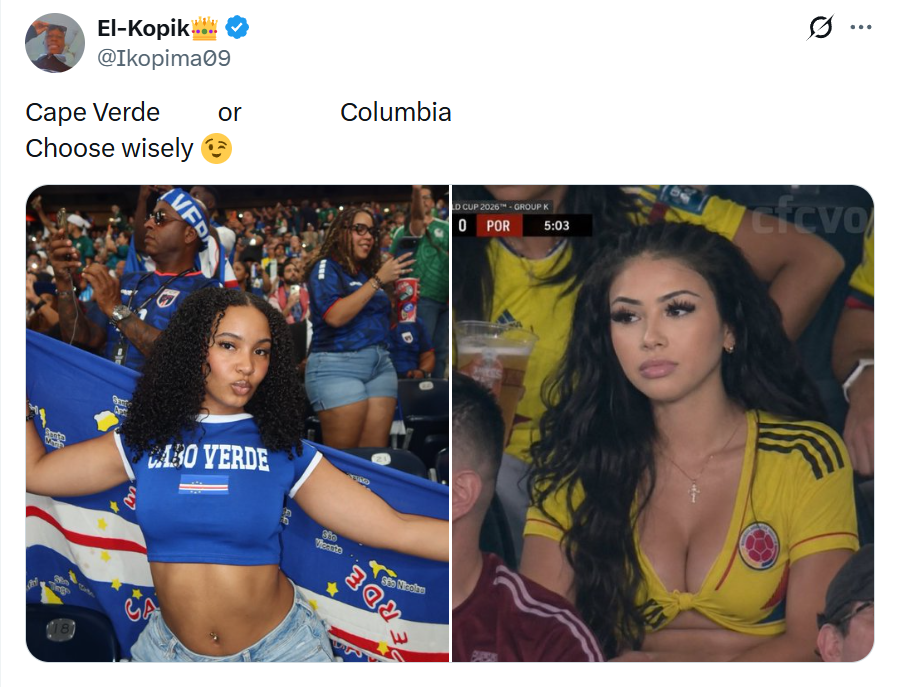
Cape Verdean women took to social media to reject ridiculous labels such as “the Latinas of Africa,” stating firmly they were African and proudly so, and expressed their disinterest and even disgust in those who wanted to visit their country for the uninformed desires. Various authentic and AI generated images were posted of Cape Verdean beauty. This presented us with a chance to discuss the problem with fetishization of mixed race women in African countries as well as the denial of their African heritage.
Conversation revealed an unfortunately persisting inferiority complex among Africans, particularly some men who appeared to be discarding the beauty of the women in their own country, as well as the desire for the “exotic” from men abroad. African women from various countries began to be pitted against each other, as though competing over male attention was more important than the actual competition for a meaningful prize at World Cup.
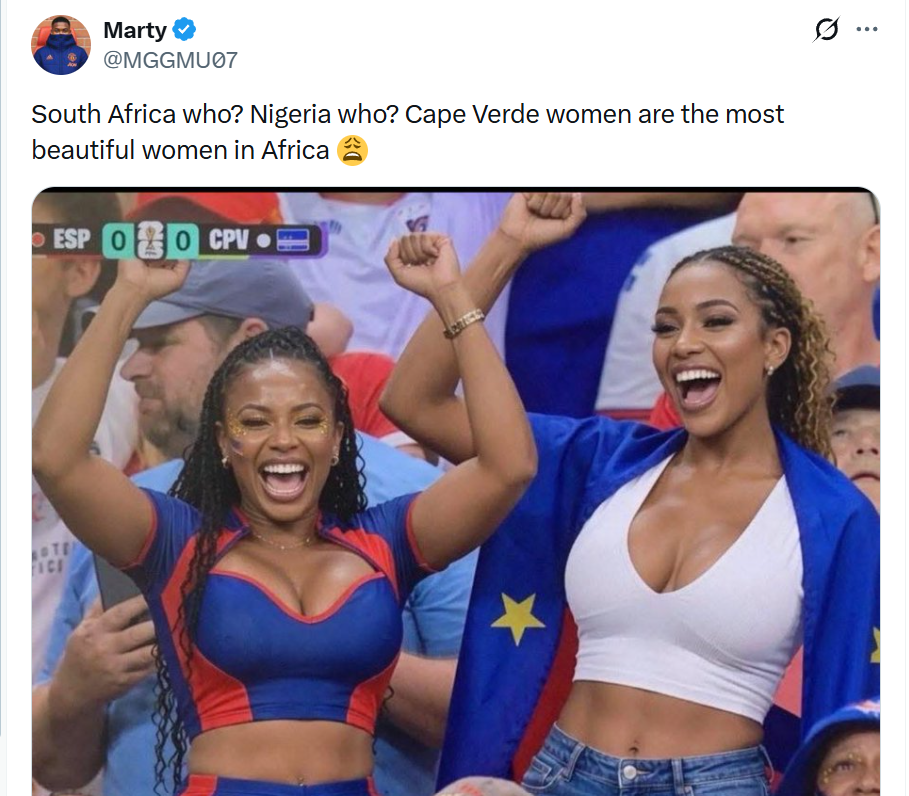
The Cape Verde example is only the most recent in a long history of mixed race women being seen as a sexual escape and mixed race women’s beauty being exoticized. However, as is noted above, this problem has existed for centuries.
Humanising the Objectified Subject
Africa has a unique position as the entire continent suffers from various negative sexual stereotypes ranging from spreading AIDS to poor family planning. Seeing as no African wants themselves to be seen through this lens, we can easily alleviate ourselves from the stereotypes by not holding them against neighbouring ethnicities. Realising that accusing Tanzania, for example, of having a certain negative sexual behaviour, only bounces back to me as a Zimbabwean, who is viewed exactly the same way in the colonist’s eye, is key to us ceasing to point fingers at others and instead look within. Developing our own self esteem and remembering our history collectively helps us to not hold contempt for those who live on the same land as us.
So while it may be harder to ward off fetishization from abroad, the best way to tack this is domestically and regionally. Digging further into the history of how sexual stereotypes of Africans were developed and how these transferred to various creolised populations across the continent and documenting it widely will help strengthen Coloured, Creole, and mestiço populations greatly, and the African countries they reside in as a whole.
We benefit from documenting our history and using it to redevelop our self esteem as well as unite against the continuation of a colonial stereotype that has followed us into the neo-colonial era. Viewing ourselves as full human beings and not merely objects of desire or extraction is important in strengthening our minds and leaving them free to think of ways to improve our lives.
Sources
Bell, L. (2017) The Other in 9/11 Literature : If You See Something, Say Something, Springer International Publishing
Gillaim, A. (1998) ‘The Brazilian mulata: images in the global economy’, Race & Class, Volume 40, Issue 1, pp 57-69
Smith, N. (1998) ‘The Matrices of Race, Class: how they converge in the lives of Southern African Women’, Southern African Feminist Review, Volume 3, Issue 1
Streeter, C. A. (2012) Tragic No More : Mixed-Race Women and the Nexus of Sex and Celebrity, University of Massachusetts Press

