The Pilot
Sue’s Nyathi’s “The Polygamist” was announced as having been adapted into a Netflix series in May, exciting viewers for the incoming episodes. From 12 June onwards, hundreds of thousands of people worldwide clicked into their profiles and binge-witched this quick-paced, witty drama surrounding the failing marriage of Joyce and Jonasi Gomora, a wealthy couple who have built the company J&J together and stood together for twenty years, now faced with the problem of Jonasi’s wondering eye.
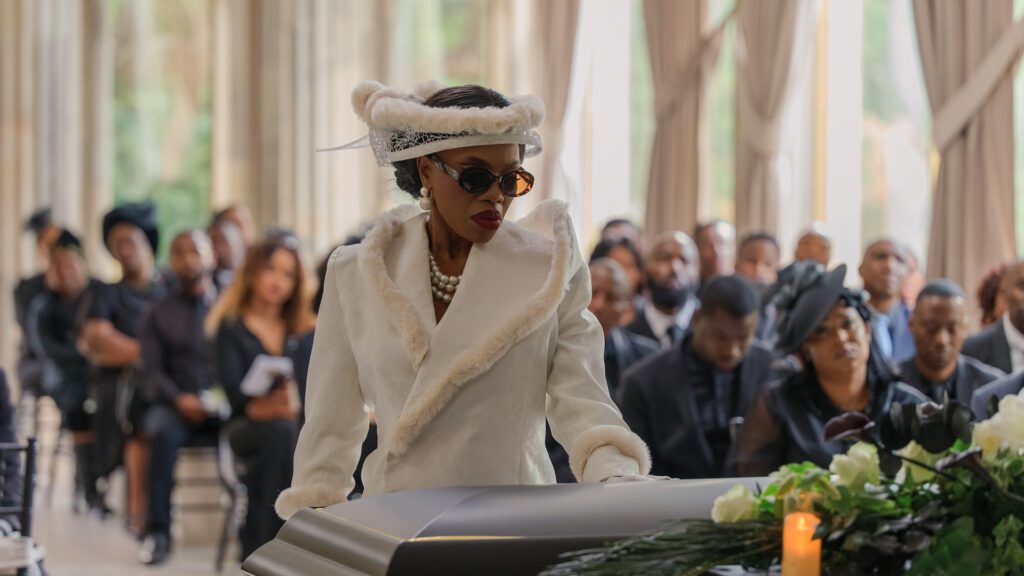
The series starts at a funeral, with Joyce speaking into Jonasi’s coffin implying that he got himself there. We are immediately left wondering what led to Jonasi’s demise, while also being shown the sheer glamour of Joyce’s wardrobe, hair and makeup. From the start, we can see that she is a woman of class, standing out amongst the crowd, eager to maintain her polished image.
We then flip back in time to Joyce’s struggles with Jonasi, who is determined to continue his relationship with his younger mistress, Matipa. We begin to see Jonasi’s use of traditional views to cover his behaviour, his male chauvinism and insistence on doing what he wants without being questioned. In contrast, we see Joyce’s commitment to marriage, also for traditional reasons, and the ways in which her calm demeanour begins to unravel as she reacts towards Jonasi and Matipa.
Warning: If you have not watched the series, this review contains a few small spoilers!
The Fashion and Style
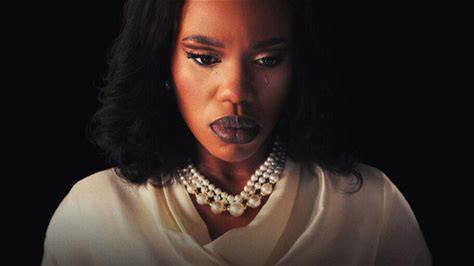
Drama continues to unfold as Joyce stands her ground for her marriage while Jonasi insists on his extramarital affair. Despite all this drama unfolding all around her, she never misses an opportunity to step out in style. Outfit after outfit stuns the audience with Joyce’s poise and class. Her hair is always styled well and her makeup is blended well. She is often seen wearing white, which would appear to be the shows way of affirming her position as first wife in the series. It also appears to represent her relatively innocent mindset, totally taken aback by Jonasi’s behaviour and resorting to traditional values to preserve it.
She has a strong desire to not be tarnished and keep a clean image of herself and her marriage. Losing her wig in a fight against Matipa is the only time she does not look the most presentable, but this is clever and deliberate choice by the producers to show just how ugly and humiliating the situation is, causing a well mannered woman to lose her temper and composure in public, leaving her exposed physically and emotionally.
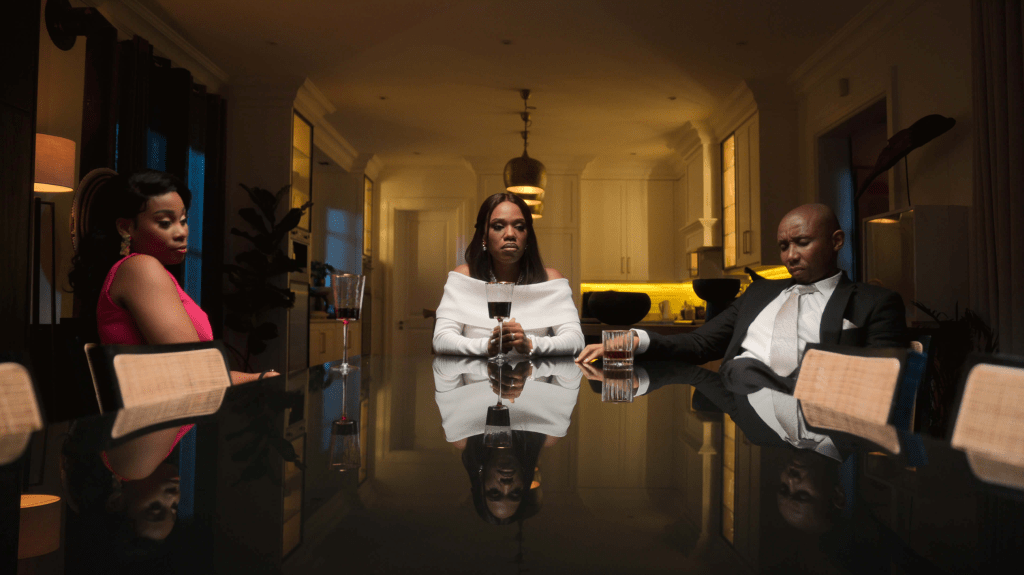
Matipa, is sharp contrast, is often show wearing red and pink to present the sexual purpose she plays in Joansi; life. Other colours like green could represent her desire for money and her envy of Joyce. Her wardrobe is not as classy and polished as Joyce’s and similarly her hair is not as well styled. This would seem to be the shows way of contrasting her as a seductress, willing to do what it takes to ruin the Gomora’s marriage and secure her future, nbut ultimately being seen by Jonasi and many other characters as nothing but a cheap escape.
Her outfits are often sexy and tight while Joyce’s are more modest. At some point in the series, Joyce’s mother had commented that she does not dress up well at home and this may be putting Jonasi off and leading him to his mistress. Joyce later changes her style at home, but the contrast with Matipa may be to show this supposed idea that a man goes out looking for a woman who dresses sexier. The relative cheapness of many of her looks when compared to Joyce’s tell us another story, which is that of the mistress who believes she will acquire the wealth the wife gets, but soon discovers that she will only get spare change. Jonasi also treats her cheaply by compelling her into calling him to meet her on a construction site, a place where her high heels should not be worn and which could easily make her outfit dirty.

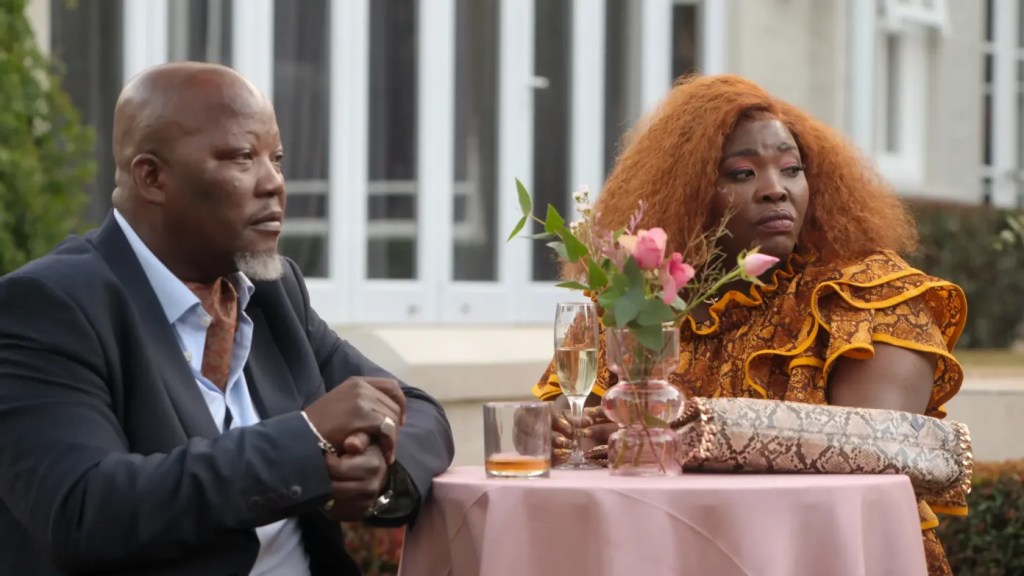
Essie’s style is meant to show her class position as a woman living in the township as well as her bold and vibrant character. She is colourful and difficult to ignore. Her flare is plainly on display, especially when she attends events. The colours represent her versatile character and ability to be more authentic than the other characters as she is not constrained by corporate life. Her hairdressing business allows her to show up as her true self. However, the quality of her clothes and makeup vastly differs from Joyce’s, and is less refined than Matipa’s. This subtly sends us the message again that the first wife remains in control of the bulk of the finances while others get what is left.
Lindani’s style is, of course, that of a teenager. She is dressed simply, just as many of the other teenagers are. Her face is plain in comparison to the older women, showing that she is not yet of the age of wearing makeup and, despite what unfolds between herself and Jonasi, still relatively innocent. Her style later changes due to the connection with Jonasi and there is an awkwardness about it all. The lingerie and dresses age her prematurely and show that she is truly out of her depth with this exploitative situation.
Mpume’s face is also left bare most times, or she uses natural-looking makeup, showing her youthful innocence. She dresses as simply as most teenagers would. He hair is kept short, which is interesting considering her mother’s wide variety of hairstyles, but perhaps this is display of their family fostering values that encourage her natural beauty during her teenage years. She eventually chooses a new hairstyle at the end of the series when she is older.

Sarah’s style is youthful though more colourful, which tells us she is influenced by her mother, Essie, just as Mpume is influenced by hers. She has her hair in braids just as Lindani does. I took this to mean that perceptions of natural hair may differ among the character’s and that Mpume’s natural hair emphasises her innocent and unchanged outlook on life until such time that her family falls apart. There may also be a need to keep up appearances by Lindani and Sarah, who could be resorting to a protective style to fit in well with their upper class counterparts.
Jonasi and his brother Magesh are often seen in suits, which is only natural for businessmen. For Jonasi in particular, this communicates his status as the head of the company, as well as head of house. He is also seen wearing smart casual clothes, but rarely dresses casually and simply, which communicates his age and his class status.
Menzi wears simple style until such time that he is told to start working, when he begins to don suits as well. Freedom’s bright and colourful style is clearly influenced by his mother, Essie, but he takes on the manly role in his suits at work alongside Menzi.
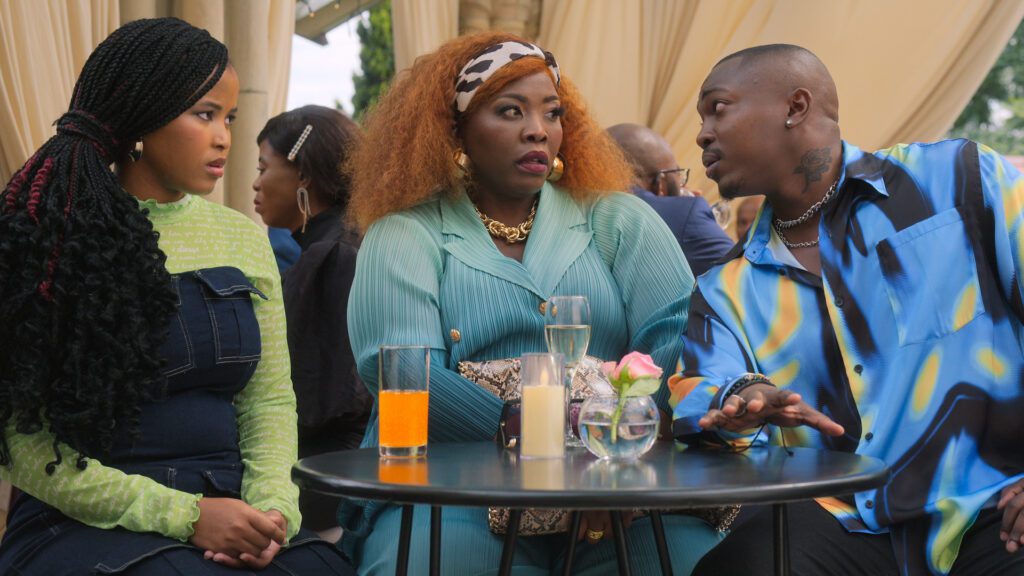
The varying style of the Gomora women tell us the despite Jonasi being insistent on having multiple women as his cultural right as a man, he fails to fulfil his financial obligations to his other wives. Despite Joyce continuing to look pristine, she is emotionally dishevelled and picked apart on social media. Jonasi’s insistence on public appearance do nothing to shield his wife from embarrassment when people learn of his promiscuous ways. He relies on everyone else, particularly Magesh, to hide the ugliness and hypocrisy of his inconsistent values.
The Theme of Masculinity
Jonasi never spares a chance to remind us that he is a man and a father. This is his justification for his behaviour towards his family and to his other wives which he cares little to elaborate on. He expects it to be understood that a Zulu man is free to make his choices unquestioned no matter what impact it has on the people around him.
He affirms his masculinity by reminding his family regularly that he has had a huge financial role in the maintenance of their upper class wife. Despite Essie being his second wife, she remains in the township, living a working class life. She is not blessed with the glitz and glam that Joyce enjoys. Jonasi uses his ideas on masculinity to excuse himself from changing this reality, reiterating that he provides for her either way.
Magesh has been emasculated by his brother’s behaviour, compelled to pretend to be married to Essie to hide the truth from Joyce. This means he cannot live his own life and form his own genuine marriage, something he clearly wants. Worse still, his brother steal Matipa from him and he is then compelled to manage the situation when Joyce gets involved. He reclaims his manhood in the role of an uncle, cleaning up Freedom and Menzi’s mess and getting them to understand the value of facing your mistakes head on. He also shows how uncles influence children’s wellbeing in how he interacts with Sarah.
Menzi’s manhood is complicated and transforms before our eyes. A quite and soft spoken boy has to become a man and prove himself as the older brother. His reactions to his father’s infidelity, which include his father’s betrayal of pursuing Lindani, whom he had a crush on, are not what the audience would expect, but the send a clear message on the problematic ways young men would form their ideas on sexuality and masculinity when they grow up in a problematic home. Similarly, Freedom’s feelings of growing up in a neglectful home are displayed in his lack of desire to fulfil the financial aspect of his manhood until pushed by Magesh.
The Theme of Envy
The desire for someone else’s husband is often coupled with the desire of what one perceives this man gives his wife. Coveting another’s spouse goes hand in hand with coveting their belongings, and this is often a motivator for the new wives.
Joyce comes from a wealthy family and her father helps Jonasi build his career and network. They later start J&J together and build an empire. Joyce begins her own gig as a social media influencer and brand ambassador. The wealth created in this marriage becomes a source of envy of many of the other characters.
Matipa seeks a relationship with Jonasi with the aim of growing her career, as well as acquiring more wealth for herself. When Jonasi makes her his third wife, she assumes she will get the attention and glamour that Joyce has, but nothing ever comes close.
Essie, who had given Jonasi money to go to university, can only look in awe as Jonasi has a publicised marriage to Joyce, only to return later and make her his second wife, and as was previously pointed out, she never moves out of the township or acquires any of the wealth Jonasi makes.
Lindani envies Mpume’s lifestyle. She has to work in the local bar while Mpume is free to study and pursue her goals. It is easy to see that this motivates her to indulge in the exploitative and paedophilic sugar daddy-sugar baby dynamic with Jonasi.
Sarah similarly envies Mpume’s life, particularly after she discovers that Jonasi is her father. Unlike her mother who is happy with the simple township life, Sarah wants more. There is an interesting dynamic where Sarah tells Mpume that she believes she is superior despite Mpume never once behaving in such a way, which is similar to Essie often saying that Joyce believes she is better than everyone. Insecurity about their circumstances leads mother and daughter to make an erroneous judgement about the other mother-daughter pair’s characters.

The irony is these women all do not understand is what they envy, and therefore enter into polygamy for, is a life of neglect and abuse that Joyce is enduring. Behind the glitter is a house covered in awful dust, producing illness with every breath taken within it.
Conclusion
These are my observations of the series and what stand out to me the most. They create a wonderful, engaging plot, and an excellent portrayal of the problem at hand. Jonasi misuses culture to engage in painful extramarital affairs at Joyce’s expense. He foregoes his obligation to consult his first wife before pursuing a second wife and does so behind her back. He then proceeds to cheat on both, and then all, his wives as each new woman comes into the playing field. He discards all their feelings at once, cowardly and foolishly using a poor interpretation of tradition to justify his carelessness.
His demise is brought on by his own stubborn and toxic view of masculinity. Joyce cleverly uses his promiscuity against him and he is forced into a humiliating situation at the end of his life that Lindani is not interested in helping. She returns him to his marital home where Joyce is able to execute the final part of her long term plan to ensure the wealth remains in the family.
Jonasi dies and culture continues to slap everyone in the face. Essie’s attempt to take centre stage is swiftly thwarted and Joyce’s position as first wife is affirmed once again at the funeral. Jonasi’s failure to abide by the culture he so virulently manipulated and subsequent failure to take care of any of these women is clearly seen in their varying emotional states.
The series ends with Joyce as the winner in the situation, which she tells Jonasi while he lies in his coffin, although she is unaware of how her husband has planted further seeds of failure in her son just metres away. A culture of upstanding manhood used as a tool to break a family apart becomes firmly embedded in Menzi who appears to follow his father’s footsteps.
The series tells us the dangers of holding on to toxic attitudes in the name of culture and how timeless this issue has been for women before us, and could continue to be for generations to come. This pertinent message is left firmly in our minds as the end credits roll out, and, as in this review, we are left to ponder and answer the pressing question of how to solve the issues of polygamy and infidelity in our present day, and for our future.