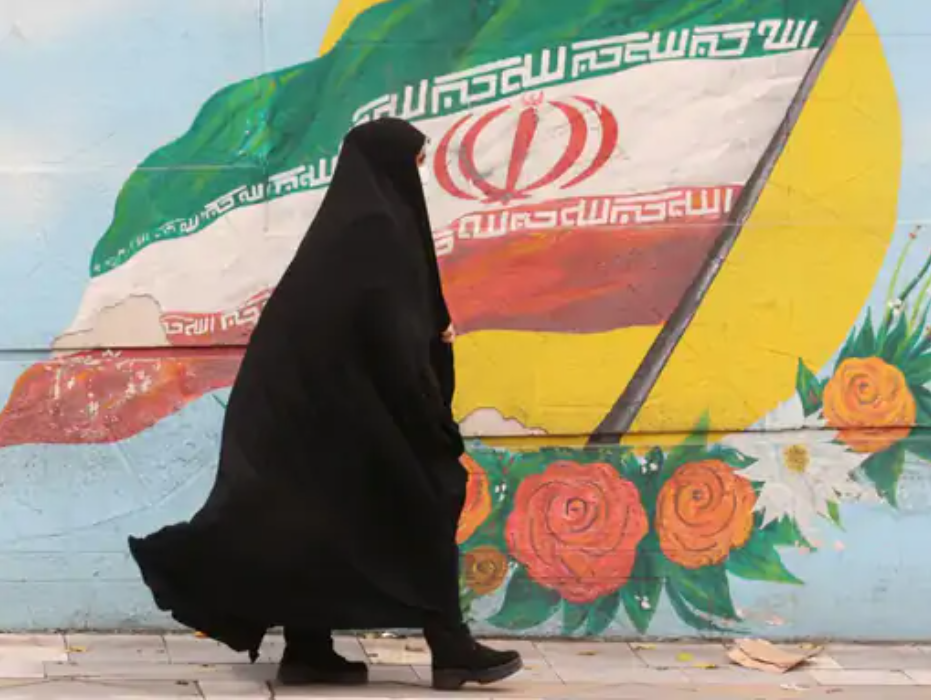
Over the last two weeks, I, like many other people with access to the internet and social media, have come across various posts highlighting a range of issues surrounding women’s rights in Iran. Each social media post or news article paints a different picture of the Middle Eastern country, ranging from displaying violence carried out by the Islamic Republic’s regime on women’s rights protesters to showcasing the myriad of achievements Iranian women have made since the 1979 Revolution.
This has opened my eyes and challenged my ideas on women’s rights. Having studied International Relations, I had previously been compelled to rethink my ideas of feminism. Growing up, I had seen war unfolding in countries such as Afghanistan, Iraq, and Syria, all often justified by their record of human rights, as well as with the aim of removing an authoritarian regime. As a young, impressionable person, it seemed sensible to remove a dictator to free the people. However, by the time I have reached my teens, seeing people my age fleeing their home after a bomb had landed just a few miles away began to make me uncomfortable and caused me to question if war was truly the only way to solve human rights issues in oppressive regimes.
I began to understand that women often fled with their children while their husbands joined whichever side of the war they supported. This compelled me to mentally wrestle with the irony of supposedly supporting women’s rights while a bomb had exploded and forced thousands of women to completely lose their rights to freedom and caused them to leave the comfort of their home to seek refuge elsewhere where they might become unsafe and at further risk of violence. Some women even lost their right to life after being killed in the war, and their daughters equally lost their lives and the chance to live in a more free and equal world.
By the time I got into university and began to learn more about women’s rights in my International Relations modules, it became clear to me that war was not the way forward. However, questions of “how” to solve women’s rights issues in countries with complex views on women remained unanswered in my mind for many years. The recent situation in Iran has brought these questions back, and so I have used my time to research and find an solution, which I will outline in this article.
Human Rights
Defined simply, human rights are the rights we have simply because we are human beings (OHCHR, 2026). They are inherent to us, protecting us from discrimination by our nationality, sex, national or ethnic origin, colour, religion, language, or any other status. The most fundamental human right is the right to life, while other rights relate to the quality of life.
The document we currently use to guide our principles on human rights is the United Nations’ Universal Declaration on Human Rights, written in 1948. The document was compiled through joint effort by diplomats from around the world, ensuring all bases were covered to consider people from all walks of life. However, in practice, human rights are often localised to each state, taking in to account various cultural and religious interpretation of human rights.
Thus, there are often diplomatic conflict among states about human rights, and in today’s world, this is often a conflict between the Euro-American point of view of human rights, and, in particularly, the Middle Eastern view of human rights (Osanloo, 2009). This also often applies to various Africa, Asian, Pacific Island, and South American interpretations of human rights. However, as this article is about Iran specifically, which is often the subject of Orientalism (Said, 1978), and idea that depicts the West or the “Occident” as civilized, and the East, or the “Orient” as barbaric” we will concentrate of the Euro-American, Christian, and imperialistic response to Middle Eastern and Islamic interpretations of human rights.
Orientalism has existed for many centuries, and can be traced back to the West’s interaction with the Ottoman Empire and fear of the spread of Islam into Europe. In recent times, the 21st century version of Orientalism can be traced to the 9/11 attacks and the perceived “threat of Islamic fundamentalism” spreading around the world and destroying modern civilisation. This stereotype is often used to justify war in Middle Eastern countries which are portrayed as needing to be contained before they bring the modern world into chaos.
This article will outline my view on women’s rights in Iranian, both as a person who was not born in the West, and as a person who currently resides in it. While I will refer to some academic sources, the article is not academic. However, I will use formal language to attempt to tackle this issue in sufficient.
Iran History
Qajar Iran (1789-1925) was established with the rise of power of the Qajar tribe, who succeeded Afsharid Iran, when the Afsharid people ruled for six decades, having taken over from the Safavid Empire (1501-1736). Then came the Pahlavi Dynasty, with Reza Shah rising to the throne in 1925. He was then succeeded by his son, Mohammed Reza Pahlavi in 1941 after being forced to abdicate.
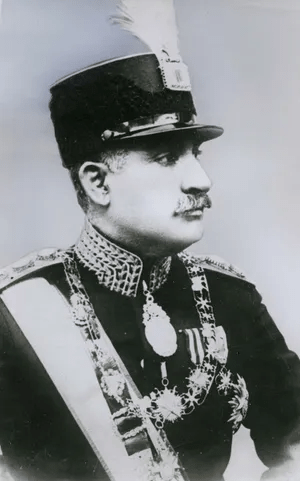
In 1951, Mohammad Mosaddegh was named Prime Minister after a struggle for control over the government between himself and Mohammed Reza. Mosaddegh moved swiftly to nationalise the British-owned oil industry in Iran, but Mohammed Reza feared that this would cause Iran to lose investment. Mohammed Reza fled Iran, but when the USA and UK staged a coup against Mosaddegh in 1953, he returned.
However, the masses in Iran became displeased with the suppression of opposition and the uneven distribution of development and wealth. The clergy in particular, began to resist his rule, and Ruhollah Mostafavi Musavi Khomeini led the Revolution that overthrew Mohammed Reza, thereby establishing the Islamic Republic of Iran in 1979.
The establishment of this theocratic republic would mean that the guiding ideology of Iran would change. This resulted in a new constitution being written up in November 1979 and adopted by the national referendum. It was later amended in 1989. This constitution is largely guided by “the values, principles and institutions of an ideal Islamic society”, as well as some liberal and left principles. This new constitution therefore governs all parts of Iranian political life including women’s rights.
Orientalist thinking has meant that Iran is often lumped with other Muslim countries when analysing its record of human rights, particularly women’s rights. However, Iran has not moved towards either Talibanist or Saudi-style conservatism, and has, instead, created its own perception of women’s rights, strictly guided by the Qur’an and Islamic legal scholarship (Povey and Rostami-Povey, 2016). Since the establishment of the Islamic Republic, a debate between conservative Islam and reformist (democratic) Islam have taken place. The majority of people in Iran have leaned towards democratic values, which is seen in their election participation. There is also political variety amongst the society, with pluralist debates taking place among hard-line and moderate conservatives, to secularists and liberals. Women similarly display differences in their political leanings, with some favouring a more Western liberal feminism, while others take forms of feminism that resist colonial interpretations of Iranian society.
Women’s Rights in Iran
The West is consumed with the idea of women’s rights in the Middle East, so it is no surprise that Iran has begun the new subject of this obsession. Orientalist ideas of Iran and its neighbours have portrayed the Middle East as an lawless place with illogical men with an insatiable taste for control over “weaker” subjects such as women and children, therefore, the “civilised” and “progressive” Western man feels compelled to intervene and “save” these Brown women from Brown men (Ahmed, 1992).
What this ignores is that, within the Middle East, and therefore, in Iran, societies are able to debate amongst themselves about their rights. Islamic feminists in Iran often debate against more secular forms of feminism, and the men within the clergy are often opposed by men who support secularism within the government, Iranian society is not monolithic, and within it resides people of a wide range of political views, ranging from conservatism to socialism.
Indeed, some Iranian men have an unquestioned desire for control over women. But other Iranian men do not, and therefore confront their fellow men and compel them to have more respect for women. Similarly, Iranian women are strong enough to counter oppressive men ad support those women who may have a “softer” or even “docile” approach to guarding their wellbeing. The interference of a foreign man who does not understand Iranian society is unneeded.
In particular, this desire for intervention is unnecessary because there are a number of areas where Iran has secured women’s right to some level, although it policies are not the same as the west due to Islamic interpretations. The Constitution of Iran states that men and women are equal:
“Article 20 : All citizens of the country, both men and women, equally enjoy the protection of the law and enjoy all human, political, economic, social, and cultural rights, in conformity with Islamic criteria.“
Article 21 gives further detail to the rights of women:
The government must ensure the rights of women in all respects, in conformity with Islamic criteria, and accomplish the following goals:
- create a favourable environment for the growth of woman’s personality and the restoration of her rights, both the material and intellectual;
- the protection of mothers, particularly during pregnancy and childrearing, and the protection of children without guardians;
- establishing competent courts to protect and preserve the family;
- the provision of special insurance for widows, and aged women and women without support;
- the awarding of guardianship of children to worthy mothers, in order to protect the interests of the children, in the absence of a legal guardian.
Hence, the document holds the government accountable for the securing of women’s rights and equality. However, some areas of women’s rights remain complicated and contentious within Iranian society as well as from an international point of view. A few examples are given below.
Birth control
Until 2012, Iran had been promoting family planning and sexual health education, which resulted in a decline in the abortion rate and a more structured approach to pregnancy. Abortion is permitted in Iran until the fourth month of pregnancy where there is a risk to the mother or the unborn child (HRANA, 2024). This is far better than the so-called progressive United States that is currently bombing Iran, where abortion rights have been taken away in several states, including Texas, where women have faced life threatening situations when they struggle to access abortion and other contraceptive care when they discover that their pregnancies have complications after 12 weeks.
However, in 2012, many of the policies that guided this were reversed, hence, further limiting women’s access to abortion, thereby increasing the number of illegal and unsafe abortions sought. An increase in unsafe abortions risks women’s health. Additionally, restrictive laws compel women to have children they may not want.
Dress Code and Morality
There is often debate about hijab and whether it allows women to choose what they wear freely. Additionally, there is debate of whether a preoccupation with being covered absolves men of their obligation to not assault women and bring them dishonour by touching them indecently. The Qur’an itself says “Tell the believing men to lower their gaze and guard their private parts. That is purer for them. Indeed, Allah is Acquainted with what they do.” (Surah An-Nur, 24:30)
At present, the Islamic Republic is imposing compulsory wearing of hijab, and this is covered extensively by Western media. The West’s proposed alternative leader of Iran, is Reza Pahlavi, whose father ruled the Pahlavi Dynasty of Iran and ordered the forcible unveiling of women (Osanloo, 2009). There is some irony that the West portrays itself as concerned with women’s choice when it comes to the freedom to reveal their hair, but not when it comes to covering it. There is a preoccupation with sexual assault related to covering one’s body, but not advocacy against the assault of forcibly removing a woman’s headscarf. This is hypocrisy.
A woman’s dressing must, indeed, not offend the laws of public decency, just as men should cover themselves decently. However, the revealing of some parts of our skin that are not associated with sex, such as our hair, shoulders, parts of our legs, should be a woman’s choice, as well as in line with her relationship with Allah. This is for neither America nor the Iranian government to dictate.
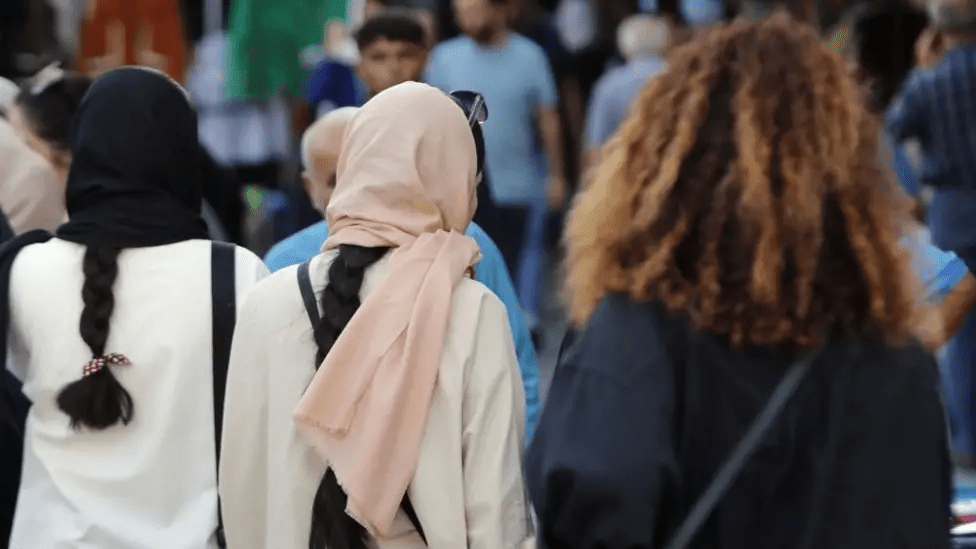
The Iranian government itself is not unanimous on hijab, with President Pezeshkian taking a moderate view that women are free to choose, while many of his colleagues take a hard-line view that it should be mandatory. Debate and protest against modesty laws have taken place among Iranian citizens since the Islamic Republic was formed (Osanloo, 2009). Hence, this society has not just accepted this new change to their private and public lives without questioning and resistance.
Osanloo (2009) interviewed a woman called Roxana who would rebel against modesty laws by covering her painted nails with gloves. Therefore, privately, she maintained her personal preference for adornment while also evading arrest by covering herself. Her rebellion is, in any case, in line with verses in the Qur’an. Sarah An-Nur 24:31 says:
“And tell the believing women to lower their gaze and guard their chastity, and not to reveal their adornments1 except what normally appears.2 Let them draw their veils over their chests, and not reveal their ˹hidden˺ adornments3 except to their husbands, their fathers, their fathers-in-law, their sons, their stepsons, their brothers, their brothers’ sons or sisters’ sons, their fellow women, those ˹bondwomen˺ in their possession, male attendants with no desire, or children who are still unaware of women’s nakedness. Let them not stomp their feet, drawing attention to their hidden adornments. Turn to Allah in repentance all together, O believers, so that you may be successful.”
Iran also had a brief opening up in the late 90s, where women began to reveal some strands of their hair and couples would hold hands in public. However, former Minister of Culture Ata’ollah Mohajerani, who was believed to be encouraging too much “permissiveness” and openness, was taken down from his position in 2000, and the morality codes were tightened. The most famous recent case of suppression of women in the name of hijab was the killing of Mahsa Amini in September 2022.
Education
A strong emphasis on education has meant that Iran has a high literacy rate for the entire population, which means that women benefit from equality in this sector. Therefore, Iran protects the right to education outlined in Article 26 of the Universal Declaration of Human Rights, 1948 (United Nations, 2026).
Divorce proceedings often compel women to educate themselves with the intention to defend their rights. Sahar, for example, read various texts to inform herself of how to petition for her divorce from her husband after he failed to fulfil his promise to allow her to finish her formal education despite their marriage when she was fifteen years of age (Osanloo, 2009). Qur’anic meetings (jaleseh) are also used to educate one another about the Qur’an and therefore Islamic law.
Iran has produced brilliant female scholars, including engineers, scientists, political and religious scholars such as Sedigheh Vasmaghi, and even authors such as Shahrnush Parsipur. Education is free until tertiary level, as is mandated by the Constitution. Many new colleges and universities were therefore established after the Republic was formed (Aryan in Povey and Rostami-Povey, 2016). Female university graduates have exceed male graduates due to these efforts.
However, quotas have been placed on some areas of work, particularly those deemed inappropriate or dangerous for women to work in. Hence, only 10 to 20% of women can work in such fields, although there is slight leeway in medical fields of this nature, which has a quota of 30%. Certain engineering fields cannot be entered by women. Social sciences and humanities are dominated by female students, as is often the case in other countries, including in the West. Female students also significantly outnumber male students at Payam Noor Distance Learning University, which is suitable for women who work part-time jobs. Some members of the clergy, such as Ayatollah Mousavi-Boujnordi, express their displeasure in the quota system, as do government officials.
Many women use university as an opportunity to leave the home, particularly when they have very conservative parents. This offers them the opportunity to gain independence and learn new skills, as well as delay marriage. On average, people in Iran get married in their mid or late-twenties. The high education rate in Iran has also resulted in a lower fertility rate, the lowest in the Middle East (Aryan in Povey and Rostami-Povey, 2016). However, women often face challenges when attempting to gain full-time employment, and are therefore absorbed into the work force at a lower rate than men.
Marriage and Family
Iran places heavy emphasis on the importance of family, and the UNDHR’s Article 16 states that “Men and women of full age, without any limitation due to race, nationality or religion, have the right to marry and to found a family.” Therefore, Iran make a great effort in securing this right for its people and spreading propaganda that reminds its population of how important the family unit is. The Iranian constitution states:
“The family is the fundamental unit of society and the main centre for the growth and edification of human being. Compatibility with respect to belief and ideal, which provides the primary basis for man’s development and growth, is the main consideration in the establishment of a family. It is the duty of the Islamic government to provide the necessary facilities for the attainment of this goal.”
It also places great value on motherhood and the role of women in the family, stating:
“This view of the family unit delivers woman from being regarded as an object or as an instrument in the service of promoting consumerism and exploitation. Not only does woman recover thereby her momentous and precious function of motherhood, rearing of ideologically committed human beings, she also assumes a pioneering social role and becomes the fellow struggler of man in all vital areas of life. Given the weighty responsibilities that woman thus assumes, she is accorded in Islam great value and nobility.”
While this produces close-knit family and community connections, it often alienates single women. Iran has introduced discriminatory hiring policies that favour men with children, married men without children, and married women with children over others. This means that married women without children, and single men and women are less favoured in the job market and may struggle to earn an income.
In terms of divorce, this is often difficult to achieve. However, women often use petitions to divorce not only to dissolve the marriage, but to reinstate their rights in marriage. A woman named Setareh, who was interviewed by Osanloo (2009), for example, petitioned for divorce due to her husband’s neglect of his financial obligations. The judged sensed some emotional hesitation on her part to divorce after he asked her if she was sure this was what she wanted, and instead ordered her husband to improve the situation within the next six months. Failure to do so would mean that she could re-file her petition and be granted the divorce. Her husband improved his behaviour within weeks, however, she was still assessing if her husband would maintain this. The court allowed her to maintain her dignity and protect her rights within marriage. Hence, while some women may struggle to obtain divorce, the Islamic obligations are reiterated by judges, compelling husbands to protect their wives’ marriage rights.
The Family Protection Law in Iran also limits polygamy, therefore giving first wives the right to divorce if their husband takes a second wife without their permission. This was not without resistance, and debates were needed before consensus was met this matter. However, the society is moving more toward monogamy due to these changes.
Political Participation
Women have voted in election in Iran and added their voices to political discourse. However, representation of women in the Iranian government is very low. Hijab is mandatory for women working in the government. Some women, such as Narges, who was interviewed by Osanloo (2009) left their government positions after being instructed on mandatory hijab. This could be seen as a form of protest for their right to choose.
Jamileh, another interviewee, narrated that she felt obligated to participate in the election of 1999 as it was the first time that city council election took place since the Revolution, despite being mandated by the 1979 Constitution. Several factors including the Iran-Iraq war had prevented these from taking place, and women, along with the men of Iran, felt obliged to participate in a national change which they felt would benefit their society greatly.
Women can obtain governmental positions, however, there are only a few female politicians in Iran at present. The current Head of Environment and Sustainable Development, Municipality of Tehran is Shina Ansari. Zahra Behrouz Azar is the Vice President for Women’s and Family Affairs, and Farzana Sadegh is the Minister of Roads and Urban Development.
Freedom of Speech and Freedom of Assembly
The clergy has generally suppressed free speech. Former Minister of Culture, Ata’ollah Mohajerani, had attempted to expand the press in Iran in the late 1990s, however, he was accused of “insulting Islamic values by too readily issuing permissions for the production ad publication of various newspapers, films, and books” (Osanloo, 2009: 84). This affected Iranian society generally, and therefore affected women, who have been arrested for participation in, or even the mere accusation of participation in protests and riots against the clergy and the government.
However, women do often convene for jaleseh (meetings) where they discuss the Qur’an and their obligations to Iranian society. During these meetings, some political discussions often unfold, usually concerning republicanism and Islam.
Women have also used Iranian media to express their views and advocate for themselves. During Reza Shah’s reign, media became suppressed, as did opposition organisations. He consolidated all organisations under state control, and this resulted in women’s journalism outlets being suppressed (Farhadpour in Povey and Rostami-Povey, 2016). When his son, Mohammed Reza took power, media was opened again for some time, and several Iranian media outlets were used to discuss women’s issues. However, Mohammed Reza Shah also began to suppress the media eventually from the 1960s to the 1970s.
When the Republic was formed, media outlets required increasing amounts of approval by the state, hence some journals have closed down. Some have closed down for other reasons such as finances. However, women are the majority of journalism students and graduates at many Iranian universities. They are offered jobs less than men, however, they continue to play a significant role in the press in today’s Iranian society. They are ambitious, and some wish to occupy leadership position in journalism, competing against fellow women for recognition rather than competing with men. While they are often highly qualified, female journalists often experience gendered pay discrimination.
Women’s Rights Without Imperialism
Iranian society is very complex and cannot be analysed through simplistic Orientalism stereotypes. Even within the Middle East and the wider Islamic world, it is not the same as some more hard-line societies such as Afghanistan, where the Taliban continue to worsen the lives of women dramatically.
While progress is not linear, it appears to be present in Iran, which is not the case in other countries such as Saudi Arabia, where women were only recently allowed to drive, or Oman, where women only gained the right to vote just over twenty years ago. Women play a pivotal and active role in Iranian society, and are not as shielded from public life as is portrayed in the media.
However, change is still needed, and Iranian women continue to protest against oppressive laws within their society. Observers from other countries, particularly in the West, therefore, also wait in anticipation for reforms to take place. That being said, this does not justify foreign intervention. As displayed above, Iranian women have adapted to the new rules of the Islamic Republic and found ways to maintain their autonomy even with strict rules over both their private and public lives. This can be witnessed through their high levels of participation in education, their unique ways of exercising their marital rights, their continued engagement with the press, and their presence in Iranian political life.
Iran’s interpretation of women’s rights does not need to look the same as the West. There is nothing inherently wrong with taking an Islamic view of women’s rights, however, there is an issue with imposition of Islam on women, whether they believe in the religion or not. Muslim countries have shown their capacity to become more secular. Albania, Azerbaijan, Kazakhstan, Tunisia and Türkiye have all adopted forms of secularism alongside Islamic values. They defy Orientalist views that Muslim countries are all opposed to the separation of religion and state. Many Christian countries have not protected women’s rights, but have not received the same level of scorn as Muslim countries. Why should Muslim countries receive harsher backlash?
The best solution would be to engage in open dialogue about the economic and political reasons for securing women’s rights, rather than having arguments about various religious views. This may also bring about conversations about the social value of changing these laws, as well as how they contribute to Sustainable Development Goals, which all countries can benefit from.
It may also be prudent to allow secular Muslim countries to lead such discussions, rather than the West. Iran, and many other countries, are becoming increasingly wary of the United States, particularly with the conservative imperialistic approach President Donald Trump has taken towards certain countries. Some Muslim countries, particularly in West Africa, also continue to deal with their difficult relationship with France. Further damaging the relationship with these already tentative countries may be unwise. It is more sensible for countries of the same religious background to have extensive discussion amongst themselves first before engaging with wider, global human rights mechanism within the United Nations.
Tackling women’s rights issues this way could prolong global peace while working towards meeting various development and equality goals. Too many wars for oil have hidden behind women’s rights discourse. It is time to tell the truth and face these global problems in a honest, pragmatic, and harmonious manner. It is fruitless to continue to engage in wars using deceptive propaganda while the common man (and woman) suffers.
A world without unnecessary conflict for resources is possible, as is a world with more cohesive discussion and efforts towards equality. It is up to humanity to stretch their minds to reimagine how we work with one another.
References
Ahmed, L. (1992) Women and Gender in Islam: Historical Roots of a Modern Debate, New Haven, CT, and London, Yale University Press
Constitute (2026) “Iran (Islamic Republic of) 1979 (rev. 1989)”, Online. Available at: https://www.constituteproject.org/constitution/Iran_1989 Accessed: 12/03/2026
HRANA (2024) “Sexual and Reproductive Rights in Iran: Battling Restrictive Laws and Discriminatory Practices”, [Online], Available at: https://www.en-hrana.org/sexual-and-reproductive-rights-in-iran-battling-restrictive-laws-and-discriminatory-practices/#:~:text=Spearheaded%20by%20Supreme%20Leader%20Ayatollah%20Khamenei%E2%80%99s%20advocacy%20for,contraception%20and%20abortion%20while%20reinforcing%20traditional%20gender%20roles. Accessed: 08/03/2026
Kian, A. (2010) “Islamic Feminism in Iran: A New Form of Subjugation or the Emergence of Agency?”, Critique Internationale, Volume 1, Issue 46, pp 45-66
OHCHR (2026) “What are human rights?” [Online], Available at: https://www.ohchr.org/en/what-are-human-rights 09/03/2026
Povey, T. and Rostami-Povey (2016) Women, power and politics in 21st century Iran, 1st edition, Abingdon, Routledge
Said. E. (1978) Orientalism, 1st edition, Pantheon Books
Sarihan, A. (2025) “The Ascendancy of Secular Trends in Iran”, Religions, Volume 16, Issue 5, p 592
 Sasha's Space