The Playing Field
A few African countries have had elections this year, such as Cameroon, Côte d’Ivoire, Malawi and Tanzania. Each has had varying results but one common theme that stands out is the suppression of the opposition. Opposition candidates including Tidjane Thiam, the grandnephew of Côte d’Ivoire’s founding father, have been barred from contesting in the election which took place on 25 October. Only small or newly formed parties have been allowed to contest.
Other issues inflame election such as French influence in Cameroon and Côte d’Ivoire, whose neighbours, such as Burkina Faso, Mali, and Niger (AES) have made strong efforts to distance themselves from French influence. All these three countries are currently under military rule, having experienced multiple and sometimes consecutive coups due to prevailing issues with democracy. Similarly, miles away, in East Africa and the Indian Ocean, Gen Z protests and a military coup have ousted the former President, of Madagascar, Andry Rajoelina, who similarly was considered a Francophile. Colonel Michael Randrianirina has been installed as President.
Aged Leaders
The age of many of these leaders is of great concern, with Paul Biya of Cameroon being 92 and sparking health concerns among his nation. His main opponent, opposition leader Issa Tchiroma Bakary, will face legal action for inciting election unrest, but the irony with his candidature is that he is 76, only 16 years younger than Biya, and much older than the large youth population of the country. Similarly, Ouattara being an 83 year old ruling over a population that is largely under age 35 (75%) provokes discourse that he is out of touch with the experience of the average young Ivorian. Malawi’s re-elected President Peter Mutharika is 85 and has also sparked rumour concerning his health. In Uganda, Yoweri Museveni clings on to power refuting speculation of his ill-health. These elderly leaders existing in the same continent where young soldiers have taken over their governments after decades of abuse of power brings an air of anxiety and tension in the political field where the next step becomes difficult to predict.

Dictatorship with a Feminine Touch
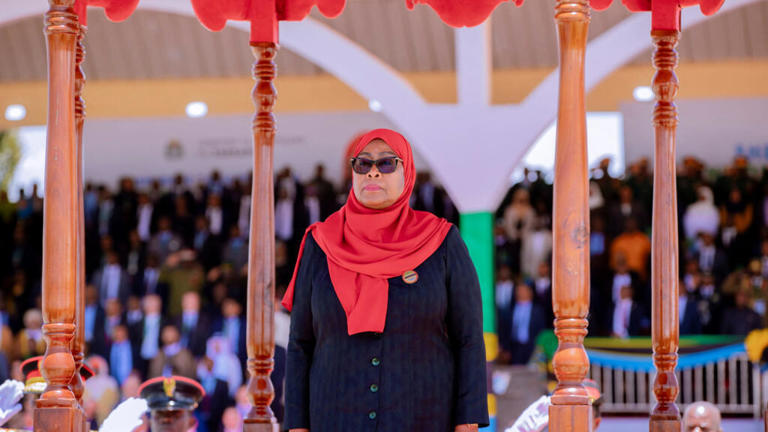
While not as old, and not male, Samia Suluhu Hassan, 65, is also attempting to extend her rule over Tanzania undemocratically. She began to ban many of her political opponents leading up to the election, leaving only candidates who were unlikely to gain significant votes. Abductions, assaults, harassment, and even torture, have allegedly been carried out to intimidate her critics. Freedom of speech has also been limited, with Twitter (X) having been banned in the country, blocking a platform that political parties could use to gain traction, and that the population, particularly the youth, could use to voice their opinions.
The opposition party claims that several hundred people have been killed by security forces in Tanzania when youth took to the streets to protest against the unfairness of their election. However, Tanzania’s Foreign Minister Mahmoud Thabit Kombo, denied that “excessive force” has been used. UN human rights spokesperson Seif Magango has said that there have been at least 10 deaths.
President Hussein Mwinyi has won the election in Zanzibar and Hassan has been declared the President of Tanzania. However, as of 4 November, travel warning has been issued by the UK foreign office as protests continue.
Rule of Law, or Ruling via Law?
Zimbabwe’s 83 year old President Emmerson Mnangagwa’s allies within ZANU PF are currently moving to extend his rule from 2028 to 2030. This unconstitutional move has raised concerns in the general population as well as ZANU PF itself. Mnangagwa is obligated to stand down in 2028, and has stated on a few occasions that he considers himself a “constitutionalist” implying that he intends to abide by the law and concede power after two terms in office. This would mean that he would have to hand over to his planned successor, Vice President Constantino Chiwenga.
Chiwenga’s supporters, as well as sections of the population that fear Mnangagwa may abuse power as his predecessor, Robert Mugabe, did for many years, are opposed to this legal change, even if it is merely for two years. Yet, loyalists of the incumbent President continue to advocate for this, with rumours that Chiwenga may be replaced by another candidate circulating. However, as Mnangagwa himself came into power through a peaceful coup, often referred to as the “coup-not-coup”, which Chiwenga led, there is anxiety that overlooking the General could provoke the military to take action.
Military Strongholds
Meanwhile in Guinea, a large fee is being charged to run in the election which will take place this December. The incumbent military leader Mamady Doumbouya has announced that he will be running for president, despite having said he follow plans to return to a civilian government.
In Chad, the 2024 election was boycotted by the opposition, calling it a “charade”, and Mahamat Idriss Deby remained in power. General Brice Oligui Nguema, who was installed in a coup in 2023, was elected as Gabon’s President in April this year.
However, Burkina Faso, Mali, and Niger all remain ambiguous about potential dates for their next elections. It must be taken into account that all three of these countries are plagued by jihadist attacks that create a very unstable security situation across their borders, therefore, creating further difficulties for hosting in elections when some parts may not be able to participate due to displacement following attacks on their homes.

A Foggy Future
Africa’s path remains uncertain, but widespread displeasure in the current state of affairs is being expressed by the youth, some more loudly than others. Hope that the African Union will step in is fading, and confidence that leaders will call each other out is waning as some collude with one another, and those who are ideologically opposed still rely on each other. Paths for youth to enter politics are blocked, and the potential for new voices to be heard is stifled.
However, when limitations are placed on people, particularly in their youth, when they are meant to be dreaming and thriving, action is often taken to seize back freedom. Worsening conditions create necessity, and as Karl Marx said:
“Necessity is blind until it becomes conscious. Freedom is the consciousness of necessity.”
Therefore, complacent leaders should not get too comfortable in their seats, particularly those who once belonged to a youth population that rose up against oppressive conditions. That the situation is dire today does not mean it will remain so tomorrow.
Across the sea, a Ugandan-Indian, Zohran Mamdani, has been elected as Mayor of New York City. His speeches often show that he is unafraid to challenge Donald Trump and his conservative policies that are unrelatable to the youth. The number of young candidates of participating in US elections is growing, giving opportunities to other youth of African descent such as Omar Fateh.
Within our own boarders, young people such as Rania Al-Mashat (Minister of Tourism, Egypt), and Emma Theofolus (Minister of Information, Communication, and Technology, Namibia) are working in government. Julius Malema and Bobi Wine use their voices to represent the youth in opposition politics in South Africa and Uganda respectively.
So while the situation is dire, there light at the end of the tunnel that the youth can walk towards. Inspiration can be found in our age mates both at home and abroad.
All that remains is to stand together and rise up as one.
Sources
Al Jazeera (2025) “Opposition says ‘hundreds’ killed in Tanzania post-election protests”, [Online], Available at: https://www.aljazeera.com/news/2025/10/31/protests-over-disputed-tanzania-election-enter-3rd-day-military-deployed, Accessed: 31/10/2025
Ali, M. (2025) “Chad’s ruling party wins majority in parliamentary election boycotted by main opposition”, [Online], Available at: https://www.bbc.co.uk/news/articles/cp31kxg35dro, Accessed on: 05/11/2025
Bulawayo 24 News (2025) “Mnangagwa loyalists plot Constitutional changes to block Chiwenga”, [Online], Available at: https://bulawayo24.com/index-id-news-sc-national-byo-255270.html, Accessed: 31/10/2025
Klomegah, K. K., (2024) “The Alliance of Sahel States: Implications, challenges and prospects in West Africa”, [Online], Available at: https://moderndiplomacy.eu/2024/09/17/the-alliance-of-sahel-states-implications-challenges-and-prospects-in-west-africa/ Accessed: 05/11/2025
Munhende, L. (2025) “Chiwenga is naive, not a politician, was castrated when he dumped military post for role under Mnangagwa – says Mliswa”, [Online], Available at: https://www.newzimbabwe.com/chiwenga-is-naive-not-a-politician-was-castrated-when-he-dumped-military-post-for-role-under-mnangagwa-says-mliswa/, Accessed: 31/10/2025
Negoce, N. (2025) “Shock at $100,000 fee to contest Guinea elections to replace junta”, [Online], Available at: https://www.bbc.co.uk/news/articles/cjekwp5xw12o, Accessed on: 31/10/2025
News Agencies, Al Jazeera (2025) “Zimbabwe’s governing party moves to extend Mnangagwa presidency to 2030”, [Online], Available at: https://www.aljazeera.com/news/2025/10/18/zimbabwes-governing-party-moves-to-extend-mnangagwa-presidency-to-2030, Accessed: 31/10/2025
Njie, P. (2025) “Cameroon opposition leader to face legal action over election unrest, government says”, [Online], Available at: https://www.bbc.co.uk/news/articles/cvgm37ny34zo, Accessed: 31/10/2025
_____________ “From government spin doctor to Cameroon president’s main rival”, [Online], Available at: https://www.bbc.co.uk/news/articles/cx2n7dq24glo, Accessed: 31/10/2025
_____________ “Gabon coup leader wins election by huge margin”, [Online], Available at: https://www.bbc.co.uk/news/articles/cp31kxg35dro, Accessed: 05/11/2025
Robinson, A. (2025) “Côte d’Ivoire’s 2025 Election: Sacrificing Long-Term Stability for Short-Term Gains”, [Online], Available at: https://gssr.georgetown.edu/the-forum/regions/africa/cote-divoires-2025-election-sacrificing-long-term-stability-for-short-term-gains/, Accessed: 28/10/2025
Sharma, Y. (2025) “Biya declared victor of Cameroon election: Why deadly protests broke out”, [Online], Available at: https://www.aljazeera.com/news/2025/10/27/biya-declared-victor-of-cameroon-election-why-deadly-protests-broke-out, Accessed: 31/10/2025
Wilson, N. (2025) “Foreign Office issue new travel warning against Tanzania trips”, [Online], Available at: https://www.independent.co.uk/travel/news-and-advice/tanzania-foreign-office-travel-warning-b2858887.html, Accessed: 05/11/2025
 Sasha's Space