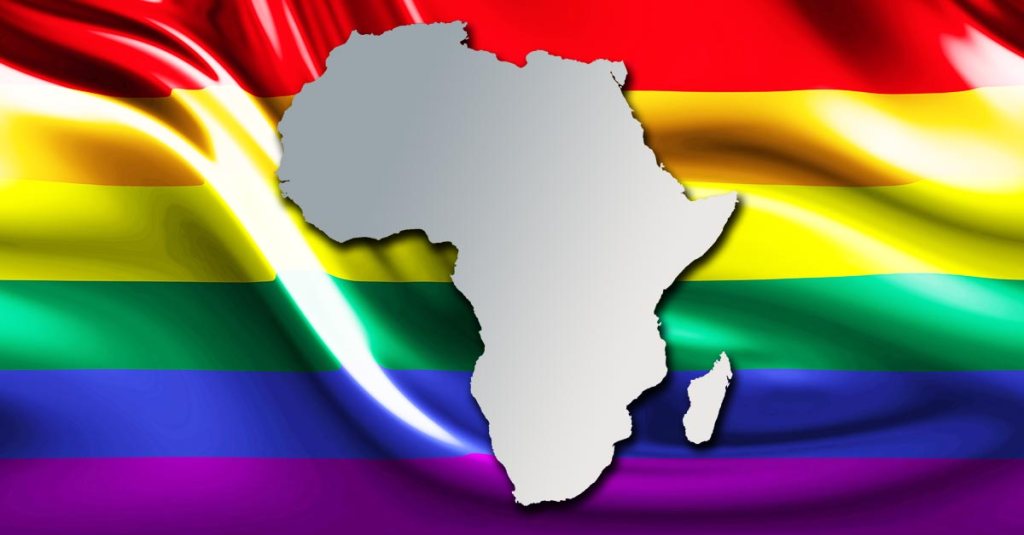
Headlines of Burkina Faso’s criminalisation of LGBT marriage and relationships have flooded the media in the last two weeks (Reuters, 2025). Social media commentors have expressed their opinions in reaction to this move, usually with disappointment at best or callousness towards the country at worst.
President Captain Ibrahim Traoré has been the subject of many media posts, several of which are AI deepfakes. The image of a revolutionary leader and “hero” has been projected on him, with comparisons being made between himself and Thomas Sankara. This move to criminalise LGBT relationships has been used as an opportunity to smite him and suggest that Burkina Faso is not so revolutionary after all.
While it is disappointing to see Burkina Faso make this move, it is futile to tweet all day with various responses, such as how “military governments cannot solve Africa’s problem” or that male African leaders “only want revolution for themselves” and so on. Rather, this situation could present an opportunity to create helpful responses to this policy to create a safer continent for LGBT Africans.
A few other countries, such as Ghana (Naadi,2024), Mali (Kojoué, 2024) and Uganda (Authaire, 2023), have also been in the media for proposals to or actual moves to change their LGBT laws. Each has been met with strong resistance, as they should, but they have also been met with suggestions of withdrawal of aid, which could worsen the situation. Thinking of other ways to amend this situation is crucial to protecting the lives and rights of LGBT Africans.
Alternatives in countries where homosexuality is not criminalised
Rather than making punitive suggestions, it may be worth thinking about redirecting our energy towards countries that already have more flexible laws or recognise and protect LGBT people.
Many of these countries neighbour countries with harsh laws, so for example, Benin neighbours Burkina Faso, as does Cote d’Ivoire. Creating asylum laws for LGBT people in these two countries may be one route Africa could take to protect LGBT people in countries that have shown very clearly that they do not intend to change their tight, punitive laws and will not be compelled to do so. Such countries’ leader could react by enacting these laws even more harshly, putting LGBT people at more risk. Focusing on creating safe conditions to escape to may be wise alternative. This would also encourage African countries to rethink their migration and asylum laws in general, making it easier for one another to travel to neighbouring countries.
Cote d’Ivoire, however, has seen an increase in discriminatory rhetoric, and so creating social awareness in this country could help to prevent a regression in their current legal stance (Rights Africa, 2024)
Alternatively, expanding laws in countries that do not criminalise being gay could also create a safer space for LGBT Africans. Countries such as Democratic Republic of Congo, Madagascar, and Rwanda have never criminalised homosexuality, while others in Southern and East Africa such as Botswana, Mauritius, Mozambique, Namibia, and Seychelles have decriminalised it. In such countries making clearer laws to recognise LGBT people could then make way for more protective laws regarding marriage.
So for example, Namibia criminalises male homosexuality specifically, but not female. Gay marriage remains illegal (Booty, 2024). In Angola, discrimination against LGBT people was banned, and same-sex conduct was decriminalised. However, marriage also remains illegal there (Miller, 2023). Changing laws could help expand LGBT Africans’ legal rights to marriage. It would also ensure that LGBT people receive public services such as health care without discrimination. Expanding and enforcing laws against rape could also tackle issues such as “corrective” rape of bisexual and lesbian women in countries that do not criminalise female sexuality but still find it socially unacceptable.
In northern parts of Nigeria and in Mauritania, homosexuality if punishable by death. However, this law has not been enforced, particularly as the world is moving away from the death penalty, considering how inhumane it is. Mauritania has not used the death penalty since 1987, and the law is mainly theoretic and in line with their Muslim faith, more specifically directed at male sexuality (Asylex, 2025) In such cases, it is likely that legislators would refuse to legalise homosexuality, but they may be open to changing the punishment from the death penalty to a long jail sentence.
This is not to enable these countries in criminalising homosexuality, but rather to identify a feasible and realistic goal when approaching them with ideas surrounding changing their laws. Similarly, in Somalia, for example, where the death penalty is enforced, it would be difficult to advocate for the legalisation of homosexuality, but raising the point that the death penalty is inhumane in general may be met with less resistance. It is also to recognise that the influence that religion has on the law in these countries may complicate complete changes to the law, and may be wiser to focus on changing social attitudes and decreasing the likelihood of LGBT people experiencing violence, or worse, being killed.
Reclaiming our history
An important step to take in discouraging discrimination against LGBT African is unlearning the idea that homosexuality is a foreign import. Many discriminatory laws in Africa were, in fact, introduced through Arab and European colonisation and came with the introduction of Christianity and Islam. Therefore, in many cases, it is actually homophobia and transphobia that are foreign imports.
Gender has not been seen in a restrictive way in Africa as it has been in Europe. For example, Queen Nzinga was often referred to as “ngola” meaning king, and she had a harem of men who dressed as women.
Ganga-ya-Chibanda, the presiding priest of the Giagues of Congo was said to cross dress. This behaviour was seen as indecent by the colonisers, but not by his fellow people (Murray, Roscoe and Epprecht, 1998: 22). Shamans in Congo were often observed having sex with other men for a variety of reasons.
Mutual masturbation among men was observed by Friedrich Bieber in Harar, Ethiopia (30). Men performing “female” tasks could also be observed in the Konso people. The Mesakin people of Sudan would have temporary marriages between older men and younger men who were “likely to outgrow” their homosexual leaning with age. Mutual masturbation was also seen in Bayaka men in Central Africa (140).
Our languages also gives us clues to homosexual activity. The presence of a word in a language usually signifies the presence of a thing or activity in that culture. That we have these words in many of our languages rather than English, French or Portuguese words that have been Africanised, tells us that African cultures observed a wide range of homosexual activity prior to colonisation. Words for men who engaged in homosexuality are found in Swahili, for example, such as mashoga, makhanith, and msenge (Murray, Roscoe and Epprecht, 1998: 78), as are words like gordjiguene in Wolof (108).
Homosexuality in men is often criminalised more harshly in Africa countries, but in some cultures, it was seen as an expression of promiscuity in teenage boys and young men, such as among the Bafia people in Cameroon (153). Sometimes it was associated with virility and homosexuality was used to prevent multiple children being born outside a marriage to one (or a number of) women. The older man who engaged in this was seen as particularly virile, and engaging with effeminate men, such as ovashengi men of the Ovambo people of Namibia. Interestingly, this is one of the countries mentioned above that had laws relating to male homosexuality, and not female.
The Nuer people in South Sudan were observed having female to female marriages according to Evans-Pritchard, as were Nandi widows in Kenya (Murray, Roscoe and Epprecht, 1998: 200). Motsoalle relationships are also seen among Sotho women (Slash Queer, 2025) While female homosexuality is less studied, there is an opportunity to expand on it and use this information to amend laws in countries where female homosexuality is not criminalised for various reasons.
Using our education systems to teach our history and further expand our teaching of our languages would be an effective solution to, at least, reducing discrimination cases against LGBT Africans, particularly those that they be at risk or violence or murder. It will also equip Africans with their own history and story to rebut against patronising white saviours who come to dictate European ideas of sexuality.
Reframing our view of the body
I will not speak much about laws relating to transgender people, as I am not familiar with this issue, particularly as it does not relate to me directly. However, Africans tend to view the body quite differently from Europeans.
Our societies give age the most importance, and are often structured by this marker, therefore, giving the elders the most importance amongst the living, while the recently passed or even ancient ancestors are seen as having the most importance among the dead (Oyěwùmí, 1997). Recognition of gender still exists, so your grandmother, for example, is the most important female in the family, or her mother if she is still alive. If your great grandmother has passed on, then she will be regarded with high status as an ancestor.
Ability and disability were also very important in African societies in the days before technology where strength was essential to survival. Therefore, much importance was also given to health.
Fertility was also given importance in relation to ability, age and health.
The body and its function is more important to Africans than the body as an aesthetic, and this may be why “cross dressing” was not seen as immoral. It is possible that the presentation of one’s body may continue to not be particularly important in modern times as opposed to its ability to function.
This may influence legislation of surgery for transgender people. It may not be accepted for negative reasons such as discrimination, or for neutral reasons such as simply not seeing the need for surgery, especially as recognition of gender was not too closely tied to the body, as can be seen with “effeminate” men doing “female” tasks in many ethnicities before colonialism. However, amending laws to focus on eliminating health care discrimination will be important in supporting transgender African.
It is also important to note that Africans may not see being transgender the same way, possibly leaning more towards similar ideas of being non-binary, or simply presenting as “man-woman” all the time and not needing to change their body. Africans are also likely to use their own words to identify and define these concepts, and similarly may not identify with the rainbow symbol. They may identify entirely different symbols and colours with their wide variety of sexualities and gender expression.
Conclusion
A wide variety of issues need to considered when approaching African governments about their stance on laws governing homosexuality, but simple steps can be taken to make small but meaningful changes. Rather than seeing Africa as a hard headed and unchanging continent, finding small loopholes and small gaps to fill in with positive change could help protect LGBT Africans much more quickly than the threat of sanctions and aid cuts. Such measures have been threatened for other political issues and those threatened with them have not yielded. So we cannot expect this method to work in the future.
Thinking dynamically about this problem can help us become adaptable and flexible to the wide varieties of expressions in our continent. It will also help us respond effectively to rapidly changing conditions across the continent. The political climate across Africa is tense at the moment due to the damage the period of liberalisation did, particularly with the imposition of the IMF and the influence that various non-governmental organisation had on Africa’s development.
Africans are reacting strongly to this, sometimes not in the most positive way. However, remaining as level headed as possible when passionately advocating for ourselves is key, but this will not be possible without educating ourselves with our own history and language.
There is hope, and there is light at the end of the tunnel for LGBT Africans. Uniting and taking bold steps towards changing our constitutions is key in this moment of history, lest we allow ourselves to backslide into a regressive abyss.
References
Asylex Legal Advisory (2025) ‘Mauritania LGBTQI+ Resources’, [Online], Available at: https://rightsinexile.org/sexual-orientation-and-gender-identity-country-list/mauritania-lgbtqi-resources/, Accessed: 12/09/2025
Atuhaire, P. (2023) ‘Uganda Anti-Homosexuality bill: Life in prison for saying you’re gay’, [Online], Available at: https://www.bbc.co.uk/news/world-africa-65034343, Accessed: 12/09/2025
Booty, N (2024) ‘Gay sex ban in Namibia ruled unconstitutional’, [Online], Available at: https://www.bbc.co.uk/news/articles/c7220g65xllo, Accessed: 12/09/2025
Kojoué, L. (2024) ‘New Mali Law Disastrous for LGBT People’ [Online], Available at: https://www.hrw.org/news/2024/11/06/new-mali-law-disastrous-lgbt-people, Accessed: 12/09/2025
Miller, C (2023) ‘LGBT Rights In Angola: Everything You Should Know Before You Visit!’, [Online], Available at: https://queerintheworld.com/lgbt-rights-in-angola/ Accessed: 12/09/2025
Murray, S. O, Roscoe, W., and Epprecht, M (1998) Boy Wives and Female Husbands, African Homosexualities, Palgrave
Naadi, T. (2024) ‘Ghana passes bill making identifying as LGBTQ+ illegal’, [Online], Available at: https://www.bbc.co.uk/news/world-africa-68353437, Accessed: 12/09/2025
Oyěwùmí, O. (1997) The Invention of Women: Making an African Sense of Western Gender Discourses, University of Minnesota Press
Reuters (2025) ‘Burkina Faso parliament passes law outlawing LGBTQ practices’, [Online], Available at: https://edition.cnn.com/2025/09/02/africa/burkina-faso-outlaws-lgbtq-practices-intl, Accessed on: 12/09/2025
Rights Africa (2024) ‘Ivory Coast: Human rights defenders seek to block wave of anti-LGBT hatred’, [Online], Available at: https://rightsafrica.com/2024/09/09/ivory-coast-human-rights-defenders-seek-to-block-wave-of-anti-lgbt-hatred/, Accessed: 12/09/2025
Slash Queer (2025) ‘Motsoalle relationships of Lesotho – Episode 25- Transcript’ [Online], Available at: https://slashqueer.com/motsoalle-relationships-of-lesotho-transcript, Accessed on: 12/09/2025
 Sasha's Space