She’s magnetic when she dances. Her songs invite you to dance sensually. When she sings, you feel called to release your inner diva.
Tyla quickly gained global fame when she released “Water” in July 2023, although she was already known by fans in South African for her 2019 debut single “Getting Late” in production with Zimbabwean artist Kooldrink (Munashe Kugarakupiri). She then released “Overdue”, collaborating with Kooldrink again, as well as DJ Lag in 2021, which features in the Netflix series Blood and Water. Then in January 2023, she released “Been Thinking.”
She released her self titled album in 2024 and gained more attention for showcasing her vibrant personality in interviews and on social media. Her October 2024 Victoria’s Secret performance stunned the world as she pranced across the stage and outshined many of the models. Her high school talents were also dug up and it was revealed that she loves painting and other forms of visual art.
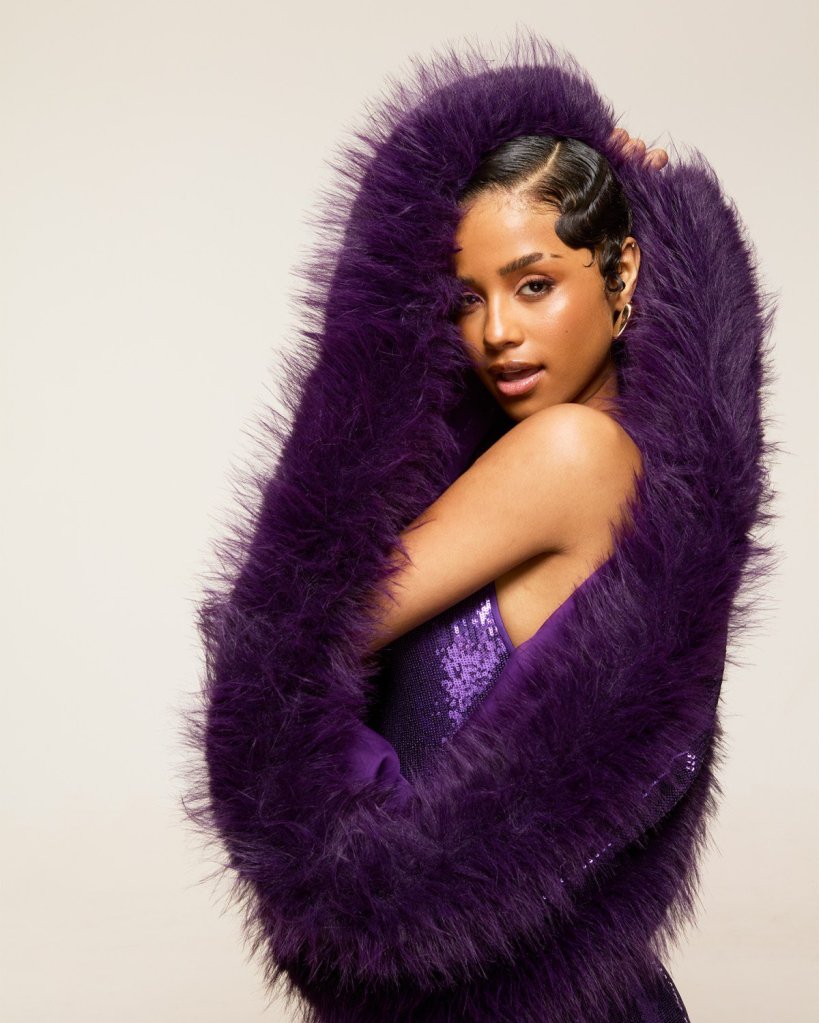
She is the embodiment of her own song, “ART” creating art while simultaneously embodying a muse. Stylists clearly love working with her and putting her in unusual outfits. Her hair is often changing, in typical Coloured girl fashion, and displays just another side of her creative flare.
She had garnered a lot of envy from American audiences who picked her apart for identifying as Coloured. Her confidence grinded some gears so hard that she was called an “uppity African” earlier this year, a term that was meant to offend, but was taken humorously by Africans on Twitter/X who owned the term. Discourse spread on the Twitter timeline about how Africans are looked at with disdain when they dare to take up space, and so the general consensus was to be absolutely, insufferably, uppity and African!
Witnessing this unfold over the last two years has been wonderful. while Coloured people, particularly women, have been presented in South African media, such as actor Kim Engelbrecht and models Liesl Laurie and Tamaryn Green. Fashion designers such as Celeste Lee Arendse and Maria McCloy have clothed South Africa. A few Coloured women including Dionne Best and Karen Stally, have been titleholders of Miss Zimbabwe. Authors such as Cecilia Carelse have also come from Zimbabwe.
But Tyla is the first Coloured woman to take the world by storm and rise to become a global superstar. Seeing a worldwide response to her and her identity is what makes her representation so important.
Gendered Coloured Stereotypes
You see, women in general are criticised for their confidence and artistic expression. They are especially lambasted when they show knowledge of their beauty and their talents. In addition to this, they are often labelled negatively when they display their sensuality and are in touch with their bodies. When they are strong and fit, this is met with derision. Women are not supposed to fill up rooms with their brilliance, and this is especially true for women of colour.
This plays out even in Southern Africa itself, where Coloured girls and women are seen to be confirming a negative stereotype of being sexually “loose” when they shake their hips too seductively, even when they are young and totally innocent to the idea of seduction. This is why, personally, I looked in disgust when a joke was made on Twitter/X that her song “IS IT” invokes feelings of dancing like a “promiscuous African prostitute in the village.” While it was meant to be humorous, this reminded me immediately of the slut shaming Coloured girls received in school when dancing or doing anything else that may “attract male attention.” Fun activities and childlike joys were sexualised.
Coloured girls are said to “have an attitude” when they speak up for themselves, and “think they are too good for everyone” when they dare to dream big. Their desire for more is bullied out of them and their imagination becomes confined.
You will notice that many of these stereotypes have parallels with those placed on Black girls and women. This is because, historically, the maternal line of mixed race children in Southern Africa was usually African, particularly in slavery times when many of the relations between African women and white men were forced. In cases where they were children of slaveowners, they might have been made to marry another white person when they came of age, especially if they were girls. In times when these children were abandoned by racist fathers, they would be integrated with other mixed race children who they would intermarry.
Marriage was one of many colonial tools used to control the “beastly” sexuality of African women, and to dominate and capture the “temptress” South and South East Asian women who were brought into the Cape Colony as enslaved workers. Sexual violence was also a tool used to stop them expressing themselves.
These stereotypes amalgamated to form the various stereotypes of Coloured people, who were seen as displaying the worst results of racial mixing, such as criminality and vulgarity. These behaviours were not seen as the result of colonialism and harsh oppression, which rob people of the ability to self determine and improve themselves, but as the faut of the colonised for simply existing.
Dampened Creativity
I witnessed many creative Coloured girls lose their spark from childhood in their adolescent years, when their menstrual period arrived and it was socially unacceptable to dance around and sing “like a mad woman.” Other creative pursuits such as visual art may have been seen as more acceptable for girls, but would later be dismissed as something that would not help them get a job. While culinary creative ability may also have been prized, it would only go so far, and young girls were expected to become ready for marriage, able to cook large meals for a family instead of trying to develop skills such as creative cake icing.
And what of those who could sew? This would be useful for mending children’s torn uniforms. But dare to dream of becoming a tailor of designer clothes and you would be met with a mocking laughter. An even more piercing cackle would be heard if you mentioned wanting to become a fashion designer.
Spending a large amount of time on hair is a common phenomenon among Coloured girls and women, often bonding while spending hours detangling and braiding each others hair, hiding away tin bedrooms together with curlers in our hair while we wait for it to dry before visitors arrive. Coloured people of all genders and sexualities are well known to dye their hair blonde for the festive season, and fashioning with a fancy barb or cut. I suppose this could even be seen as some sort of beauty ritual. And yet, ironically this has not produced a wide enough love for hairdressing as a profession and as a creative pursuit. Many young girls would thrive in this field!
Much of this is influenced by colonialism and neo-colonialism, where all non-white people had limited choices before their countries gained independence, and may not have been able to pass on any generational wealth to their children or grandchildren after independence. Religious influence during colonial times still throws a shadow over the neo-colonial era, causing some to view creating secular music as sinful, or seeing their own body’s ability to dance a certain way as immoral. While some do use their talents to sign and perform gospel songs, financial constraints often prevent them from taking their praise and worship to global heights.
South Africa’s economy is one of the biggest in Africa, so its creative industry is much larger, which has afforded it a global platform. This is why Tyla has managed to become as famous as she has.
However, other countries where Coloured populations live are not as large. Botswana and Namibia are both fairly stable countries, but are both currently being affected by changes to global diamond trade, as well as having small populations generally. Zambia is faced with issues of debt and has a very small Coloured population. Zimbabwe is continuously plagued by economic issues in a challenging political climate, as well as sanctions which have all combined to cause a severe decline in funding for the creative industry over the past two decades.
Talent surely exists in all these nations. But where does one get the inspiration from when faced with various challenges? Who does one look to as their benchmark?
A Signal for Change
I believe that having Tyla representing Coloured girls and women provides them with a positive image and communicates a clear message that it is possible to succeed globally. While other countries in SADC may have various barriers to funding to their creative industries, having a global inspiration in combination with national and regional celebrities gives the youth a huge push to demand more and to advocate for their art to be seen. Tyla working alongside other Southern African creatives also tells us that it is possible to network with each other and get each other’s feet in the door.
I myself was inspired to start writing again and to start looking further into Coloured history so that young girls in the generations to come have more to read about themselves than I did. And so I hope that other young Coloured women are similarly encouraged to reconnect with the creative side and showcase themselves.
This feels like a new era not only for Coloured women, but for Southern Africa as a whole. Its our time to shine. We have stories to tell and art to showcase. Its time to put it out there. Starting small may, hopefully, encourage governments to invest in the massive creative potential we have sitting in our region and in our diaspora.
Write that article. Choreograph that dance. Compose that song. Design and sew that dress. Wear that “weird” hairstyle. Show off your authenticity.
Its time for Southern Africa’s talent to be seen and heard!
 Sasha's Space
One thought on “Why Tyla is So Important for Young Coloured Girls”