I’ve kept the title very bland and uninspiring because I am not here to say something flowery and pretty like I have in other blog posts. I am here to talk about something very real and serious.
Over the last 24 hours, we have been saddened by the news of Daev’s passing. I will admit that I did not have any knowledge of Daev or his music before this event went viral on social media, but from what I gather, he was gaining popularity in Zambia. Perhaps this is why an unsettling video of him being abused was leaked.
The video, which I encourage us all to report so that it may be deleted, shows Daev being hit by Yo Maps’ girlfriend with a belt, being made to say things or sing things while also being made to kneel. I am not sure what else occurred in this situation as I did not finish watching the video. It should not have been taken and neither should it have been posted on the internet. However, it was, and naturally sparked discussion about male victims and while this is good to see, its sad this no real solution was presented and it just turned into a blame game. Gender stereotypes were thrown around on Twitter and no analysis was done on why exactly male survivors of domestic violence are often ignored or compelled to tolerate abuse.
You see, gender violence is not necessarily a man vs woman thing, it is actually an all of us vs patriarchy thing. Patriarchy does indeed favour men by virtue of giving privilege to masculine and male individuals (cisgender heterosexual men), and therefore taking privilege away from feminine individuals. This is because patriarchy has created a gender construct within which we must live. Masculinity is preferred over femininity and therefore those who possess masculinity can climb to the top of the hierarchy, trampling on the rest.
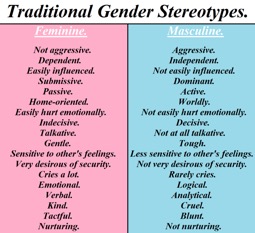
Masculinity has been associated with desirable characteristics such as strength, power, leadership, authority, courage, independence and assertiveness. Femininity, being the opposite, has been associated with less desirable traits such as softness or gentleness, empathy, passiveness, cooperativeness and humility. In and of themselves, there is nothing wrong with either masculinity or femininity. The problem lies in how we have socially constructed them. That masculinity is associated with strength in its most positive sense means that femininity is associated with weakness in its most negative sense is where things become complicated. And that weakness is not acceptable in our society is where the problem truly lies. This is what we call toxic masculinity, where exaggerated and unreachable levels of masculinity are expected to be displayed and even the slightest show of femininity is deemed unacceptable.
| Masculine | Feminine |
| strength | gentleness |
| power | vulnerability |
| assertiveness | meekness |
| leadership | receptiveness |
| courage | shyness |
| independence | reliance |
| tactful | sensitive |
Having established these binary relationships we can then guess why gender violence occurs from men to women. Because men take on the dominant role it is expected that they “lead” the relationship, marriage and family, and by default, the woman must take of the subservient role of submitting to her husband, obeying him and taking care of the family.
When the woman does not follow this order of things, she is said to be disrespecting her husband, who is expected to remind her of her role. In the healthiest sense, this should only need a conversation where the man communicates his needs respectfully, but we do not live in a perfect society. So, unfortunately, a woman’s failure to take up her role is taken as a slight against her husband and the woman needing to be put in place. This often results in either very unhealthy conversations or physical violence. Violence is seen as a justifiable way of the man establishing his dominance is it reinforces the “weakness” of the woman and puts her back into her vulnerable and passive role, where she is forced to do her duty without question, lest she experience further violence.
We have come far enough to understand that this behaviour is unacceptable and therefore systems have been out in place for such incidents to be reported. Statistics have found that about 1 in 5 women have experienced domestic violence from their partners at least once in their life. Despite this, figures do not reflect the full picture and many cases go unreported. We can assume that domestic violence is far more prevalent than numbers currently show.
Domestic violence is often kept quiet because we also live in a world divided up into the public sphere and the private sphere. The public sphere is associated with work, politics and so on. Men’s business, if you like. The private sphere is concerned with the home, family and women’s business. Because domestic violence often happens in the home and is between families, it is kept private and out of the public sphere. It is, literally, considered a private matter that must not be spoken of and brought into the public.
| Public | Private |
| work | home |
| politics | family |
| authority | emotion |
The same reporting systems do exist for men as well, but in many countries, men still struggle to get justice. This is in part due to the way the law is written, sometimes defining gender violence as only happening to women and not to men. In countries where it is defined more neutrally, men still struggle to report their cases due to the shame that it carries. While women feel shame at being beaten over failing to be a “good wife/girlfriend” men feel shame at their failure to be “manly” enough. How can a man, who is meant to be strong and commanding of respect be a victim of violence at the hands of a feeble woman? It seems impossible, and to some, laughable. But it does happen, and here is why it often goes underreported.

Let’s look at violence between men. If one man beats up another man, the man who loses the fight has also lost his dominance and is sometimes said to have been emasculated. He has failed to fill the so called alpha male role, he loses his credibility, and is assumed to lack the ability of controlling those around him. Some would say he fills in the beta male role.
If this is true between men, who we assume are of comparable physical strength, we can imagine how much more emasculatory it is from a woman who is presumed to lack the physical ability of a man. Not only has the man been emasculated, but he has shown himself to be even less than someone who is presumed to be more delicate than him and incapable of dominating. In addition, the violence happens in the home, so it is considered a private matter. It must be understood that despite a man possessing masculinity and the capacity to go into the public sphere, violence of this nature is still considered private because of the “feminization” or emasculation of the man. To be dominated is a feminine matter, not a matter of strong men. Here, the woman occupies a toxic masculine role, where she gains power over a man unfairly. To shed the weakness that has been imposed on her by patriarchy she attempts to adopt these more “powerful” masculine traits, but in a way that causes the man to lose his own independent power. And to her, the only way to do this is through causing harm to him.
It is not always a case of man vs woman as I said before, but rather attempts to shed femininity by exhibiting toxic masculine traits and behaviours.
Knowing this how do we go forward? The answer is to simply look into ourselves and figure out how we, on a day to day basis, contribute to patriarchy and perpetuate situations where a woman can be beaten by her partner or a man can be assaulted by a woman. As mentioned earlier, statistics for violence against women show, to an extent, the severity of our day to day language, as between 70% and 80% of people killed by their partners are normally women. The rest are men. This shows that, because we live in a society that speaks of violence against women as justifiable and commonplace, numbers for femicide are higher than for men killed by their partners. And that, although the figure for men is lower, the way we speak about gender still perpetuates situations where such a murder can occur. The only way we can stop this is if we stop speaking of gender violence or violence between partners as though they are “natural” responses to being hurt or disrespected.
We have to allow men to explore their femininity without judgement, therefore allowing for softness, emotional expression and vulnerability in them. This gives men the opportunity to communicate their needs to their partners in healthy ways, where each partner can negotiate and find common ground, rather than one imposing their will on the other. On the flip side, women will not seek to mimic men’s violence or to occupy these masculine roles in a toxic way, and will also allow for negotiation in times when conflict arises. We must allow for all people to express both their masculine and feminine traits as they channel them. It is not possible to separate these energies and assign them to one gender and not the other, because each individual will display these traits whether they want to or not. They will display them whether they themselves consider themselves more masculine or feminine. Because binaries are not realistic, and nobody sits on one end of the spectrum while others sit on the other side. We all slide along a spectrum of gender in different ways every second of the day.
Lastly, let us bring justice to the passing of this man. Although his death was not caused by gender violence, it is right that we still continue to fight for victims of such incidents so that they do not continue to have such an ominous presence in our societies.
RIP Daev. May your soul rest in peace and fly high in the heavens.

 Sasha's Space