So, over the last few weeks we have been seeing many videos and photographs of violence committed against minorities, but especially Black people, particular by the police. We have been saddened by news of Black men like George Floyd and Ahmaud Arbery, Black trans men like Tony McCade, Black women like Breanna Taylor, and Black trans women like Nina Pop, being murdered by the police. I am not sure how appropriate it is for me to add their photographs in this blog, so I would rather urge those of you who read this to search for them and remember their faces. So many Black people die without their faces or names being remembered, and so many deaths go unnoticed. Kimberle Crenshaw has a brilliant TedTalk on intersectionality that highlights just how people become nameless.
These incidents have inspired me to write a summary of two academic texts I have read on violence in order to educate people on what violence actually is and how many things come together to create these types of horrific crimes. I know some of these things may sound obvious to most, but I personally think it is important to share this kind of information to those who do not have access to books and academic articles for whatever reason, and give them an opportunity to learn.
The texts I will be summarising are Galtung’s writing on violence. Reading his work made me realise many things about how we view violence and therefore the things we miss or do not interpret as violence, due to how we have been taught think of it. I will add the names of each text at the end of this blog.
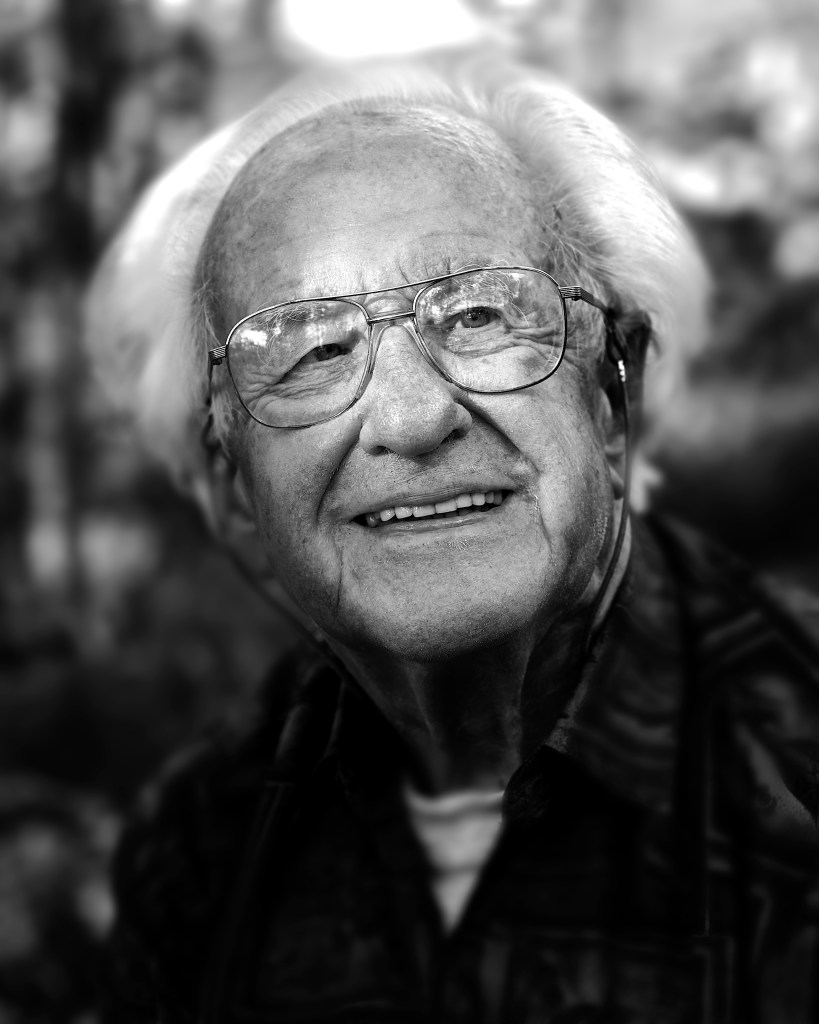
“Violence is that which prevent us from reaching our full potential.”
Galtung’s writing in 1969 defined violence as that which prevents us from reaching our full potential. In his text he gives the example of going to the hospital when you are ill. The potential situation is that you will be cured and move on with your life, as this is what the state has said you should receive. If you go to the hospital and they simply do not have the means to cure you and you pass away, no violence has been committed. If, however they have the means and simply choose not to give them to you and you pass away, then violence has been committed. The actual situation does not match the potential situation and the deliberate creation of this gap is violence.
When we think of violence we often picture images of fights, war, guns and other weapons, perhaps blood, death and other physical things. This is only one type of violence.
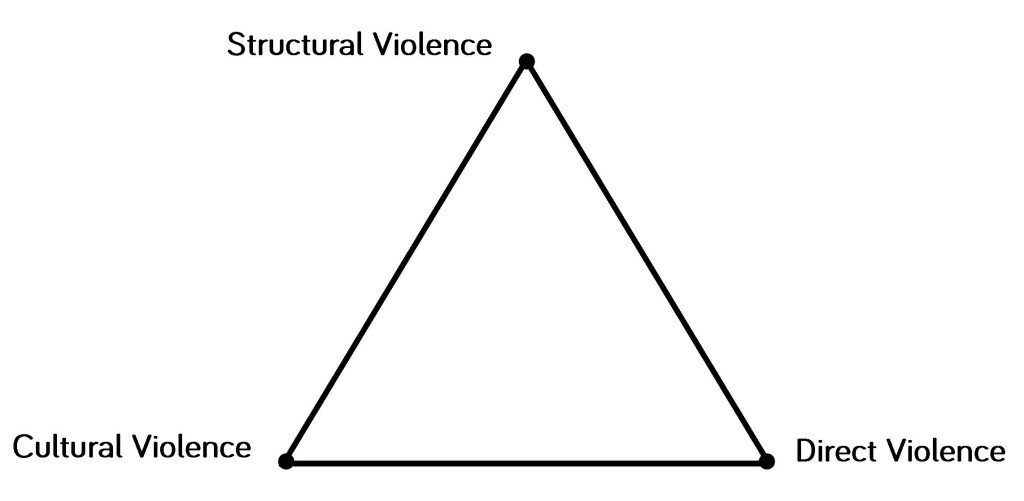
There are three types of violence according to Galtung. and this one that we often picture in our mind is direct violence, also called physical violence. So as I have said, this where a person is hurt or hit and has been damaged by this impact, and therefore has been prevented from reaching their full potential, perhaps by the pain caused, trauma, injury and so on. Physical violence, as the name suggests can be traced due to physical evidence of it having occurred. This can also be done to animals or objects such as buildings. If they are harmed or damaged, they have also experience violence.

The second type of violence is structural violence which is brought about when the state creates social hierarchies, giving some people privilege and therefore limiting other people’s privilege. As we all know, privilege helps many people get through life a lot easier and those without it struggle. So the creation of this gap is where the violence lies. Privilege does not exist in a vacuum, but persists because resources are continuously geared towards the privileged while the underprivileged get less than them, or sometimes get nothing.
So for example, if you are potentially supposed to be allowed to access education and you are told you cannot because you are a girl, and only boys can go to school, then violence has been committed. The potential situation is that you would graduate and get a good job, but the actual situation is that you do not get education at all. As a result, you end up with either no job, or a very low paying job. Further violence can be inflicted on you by paying you below the minimum wage, making you work outside the recommended limit of hours, not providing you with safe conditions or intimidating you if you attempt to make a compliant about your treatment.

The third type of violence is cultural violence. This is when, within the structures created, one type of culture is valued over others. The privileged group socially constructs their culture as being superior to the other culture or cultures and excludes anyone who does not follow them. Cultural violence is often seen in things like language, art, music, writing and so on. The potential situation is that the underprivileged culture could have been allowed to speak their language, write their history and so on, but instead, the actual situation is that their language is discouraged and their history revised.
I would not like to upset anyone, so I will not post a picture of cultural violence, but just imagine those cartoons you have seen depicting Black people as mammies or golliwogs with very large red lips and extremely dark skin and other exaggerated features, or of Arab Muslim people playing with bombs. Think of statements made describing a minority tribe in your country as “lazy”, or of a race being described as “criminals”, perhaps even “rapists.” Think of people laughing at the way words in a language are pronounced, or the sound, intonation or accent it is spoken with. Think of songs that make fun of a group of people. Think of “WE” are the greatest vs “THEY” are not part of us. This type of language or behaviour is cultural violence.
“Physical violence is not a stand alone event.”
Cultural violence is used to justify structural violence and structural violence is used to justify direct violence. Therefore, physical violence is not a stand alone event, but rather one incident occurring within a web of small microaggressions that lead to the final blow. Therefore, to get rid of the ugliness of shooting, beatings and murders, one must get rid of inequality and readjust their language.
This requires us all to look into ourselves and examine how we contribute to the structures we live in and how our speech and behaviour can contribute to harm inflicted on others. It requires recognizing our privilege and using it to turn the situation around by raising awareness to racism, classism, sexism, anti-LGBT rhetoric, particularly anti-trans, anti-non-binary and anti-intersex rhetoric, anti-Islam sentiments, ableism and so on. We have to think about the way we talk about people’s spoken language, their hair, their skin, their faith, their sexuality, the way they present their gender or sex, the way they use or are not able to use their bodies. We have to look into areas we may have not realised we are a few steps ahead of them and try to speak up to even out the playing field. Its time for a more just world and for us all to stop being selfish.
“Recognition of privilege is…a spiritual awakening.”
This recognition of our privilege does not ever mean that we are bad people because we possess it. I myself experience a level of class privilege and that is why I have taken my time to write this article as my parents have the money to get me educated abroad and I can afford books and so on. Recognition of privilege is not only a political awakening but a spiritual awakening to the disturbances within our world. It is a journey into the thick of things rather than around it, where we stand next to the whispering voices of the fearful, hold their hand and give them the confidence to scream out their grievance.
“All lives will not matter until Black Lives Matter.”
Using our privilege is allowing those who have been wronged to be angry while we support them when they are too exhausted to speak anymore. It is telling those who have similar privilege to us that the underprivileged’s anger is not misplaced, but a valid and human actions. Yes, anger is human. And to police one’s anger is to dehumanise them. Yes, I use the word police deliberately. All lives will not matter until Black Lives Matter, and it is time we recognized that and did our part to change the situation we live in. And it starts here with unlearning what we think the word “violence” means.
Endnote: I recognize the irony of using a White man’s writing to speak about the issue of violence against Black people. I do intend to summarise more Black people’s writing in future. For now, I highly recommend looking into the writings and speeches of people like Patricia Hill Collins, Kimberle Crenshaw, Angela Davis, Malcolm X, James Baldwin and many other who write on racism. Also Dr Joy de Gruy as an amazing lecture on Post Traumatic Slave Disorder which talks about how trauma and violence have passed down from generation to generation. It is available on Youtube.
Texts summarised:
“Violence, Peace and Peace Research (1969) and Cultural Violence (1990) by Johan Galtung
 Sasha's Space